
A Canadian restaurant group can have a strong brand and still stall if the people system behind it cannot keep managers in place, stay on the right side of provincial employment standards, or support locations that rely on temporary foreign workers. Restaurant chief people officer recruitment is the work of hiring that leader: a people executive who can hold culture, compliance and frontline retention in the same brief. The seat is not a renamed administrative function, and it should be defined before you start calling candidates.
This guide is for CEOs, boards and multi-unit restaurant operators in Canada who need a chief people officer or senior people leader. It covers provincial employment standards, the added complexity of Quebec, temporary foreign worker reliance and frontline retention. Lecours Group's hospitality recruiters look for people leaders who can work with operators, not only with a head-office policy manual.
Where this page fits
This page is about the people leader for a Canadian multi-unit restaurant group. Hotel and club people leadership are different seats, covered in our hotel director of human resources recruitment and private club director of human resources recruitment guides. Keep those neighbouring pages linked but distinct, so this brief stays on restaurant groups, multi-unit operations and the Canadian employment context that comes with them.
Titles vary: Chief People Officer, Chief Human Resources Officer or VP of People. Agree whether the role owns talent, culture, labour relations, total rewards, leadership development and frontline retention, or only a narrower slice of that work. A leader who arrives to find that labour, training and culture all report elsewhere will spend the first year negotiating the job instead of doing it.
What a Canadian restaurant people leader owns
Provincial employment standards, not a single national rulebook
Canada does not run on one employment statute. Hours of work, vacation, public holidays, termination rules and leaves change by province, and a multi-unit group that operates in more than one of them needs a leader who can design people systems that remain accurate in each jurisdiction. Ask candidates how they have built or overseen policy, manager training and issue escalation across provinces, and what they changed when a national template did not travel.
This is not a request for legal advice from the recruiter or from this guide. It is a test of whether the person has already done the work of keeping operators out of avoidable trouble while still running a restaurant business.
Quebec as an operating reality, not an afterthought
If the group has restaurants in Quebec, or plans to, the people leader must be able to work with Quebec's employment and language context rather than treating the province as a translated copy of an Ontario handbook. Ask how they have staffed in-market expertise, supported bilingual communications with employees, and handled issues that had to be resolved under Quebec rules. A candidate who has only ever run a single-province, English-only system will need a very clear plan for how that gap will be closed.
Temporary foreign worker reliance
Some Canadian kitchens and restaurant locations rely on the Temporary Foreign Worker Program, or on other international labour pathways, to keep the operation staffed. That reliance is a workforce-planning problem as well as an operational one. The people leader should be able to discuss how those locations are supported, what happens when a permit, housing arrangement or renewal is delayed, and how the group avoids building a model that only works if the program stays exactly as it is. Ask for evidence, not a slogan about being "open to global talent."
Frontline retention
In a restaurant group, the product is delivered by people on the floor and in the kitchen. The chief people officer has to make manager quality, scheduling discipline, training and recognition work at unit level, not only in a head-office slide deck. Look for leaders who can talk about general-manager capability, assistant-manager pipelines and the reasons good hourly and supervisory people leave, and who have changed something measurable as a result.
Why these searches need discretion
- Strong people executives are usually employed. A public posting may not reach them, and it can unsettle managers mid-year.
- Labour and culture issues are politically sensitive. An incumbent, a franchisee group or a founder-led culture may still be in place.
- Workforce plans can be confidential. Temporary foreign worker arrangements and restructuring conversations should not leak through a job ad.
- The Canadian talent pool is finite. Informal enquiries travel among people leaders in restaurants, hotels and other multi-site operators.
Who recruits for this seat
Wray Executive Search frames the restaurant chief human resources officer and chief people officer as a strategic leader who must handle turnover, frontline development, labour compliance and franchise workforce issues, not only a corporate department. Norman Consultants recruits chief people officers and senior people leaders for hospitality businesses, and describes the mandate as hiring at scale, developing managers and holding the brand together through a high-volume frontline workforce. Innovations Hospitality Search lists chief people officer and senior human resources leadership among the restaurant executive seats it recruits. The Elliot Group includes chief people officer among the roles it places in restaurant and hospitality organisations. RestaurantZone also names chief people officer and senior vice-president of human resources among the executive seats it covers. Those pages are useful market context from US and UK firms. They are not Canadian salary surveys, and they are not a live vacancy at your group.
Lecours Group keeps the brief Canadian: provincial employment standards, Quebec, temporary foreign worker reliance and frontline retention should be in the scorecard from the first conversation, not added after a shortlist appears.
How a confidential search should run
- Audit the people system. Review turnover, manager stability, provincial exposure, Quebec capability and any reliance on international labour before writing the brief.
- Name the first-year problem. Retention, compliance risk, culture after growth, or a leadership bench each imply a different leader.
- Map employed people executives. Consider restaurant chief people officers, senior multi-unit people leaders, and hospitality or retail executives with genuine frontline evidence.
- Test judgement with real cases. Use a multi-province policy question, a Quebec scenario and a retention problem with the same materials for every finalist.
- Involve operations. A people leader who cannot work with operators will not earn the system.
- Protect confidentiality. Limit names while labour issues or leadership changes are in motion.
Questions that reveal judgement
Ask a finalist to walk through a location that was legally and operationally going off the rails. What did they see first, who did they involve, and what changed for the other restaurants? Follow with a Quebec or second-province example: a policy or process that could not simply be copied from the home province. Then ask how they have reduced turnover among managers or key frontline people without lowering standards. References should include a CEO or operator as well as a people-team colleague.
Common mistakes groups make
- Hiring a corporate people executive with no restaurant operating empathy.
- Treating Quebec as a translation step.
- Leaving temporary foreign worker reliance outside the brief until a location is already in trouble.
- Measuring the function only by head-office activity, not by manager and frontline stability.
- Letting every founder, operator and advisor give the candidate a different mandate.
Before interviews begin, decide whether the first year is about retention, provincial consistency, Quebec capability or leadership development. A candidate cannot repair all of those at once, and the panel should not pretend otherwise.
What compensation conversations should cover
A restaurant chief people officer mandate may justify a substantial leadership package, but we do not publish Canadian figures without verified evidence. Discuss base, any performance arrangement, benefits and the travel reality of a multi-unit role. Do not invent pay numbers, and do not import an American restaurant-group posting as a Canadian budget shortcut.
What a hospitality-rooted firm adds
Restaurant people leadership only works when the restaurants can feel it. Lecours Group looks for executives who hold culture, employment standards and frontline retention in the same brief. Review the hospitality clients we've placed for when considering organisations that trust us with senior appointments.
Start a confidential conversation
If you are planning a restaurant chief people officer appointment in Canada, tell us about the mandate through our find candidates page. If you are exploring leadership opportunities, review our current openings. As of this writing, the board includes Restaurant Manager #10836 in Toronto; that is a current unit-level search, not this people-leadership seat, but it is a reminder that manager quality sits at the centre of any serious people plan.
Our team has spent years recruiting senior leaders across Canadian hospitality and restaurant groups. Meet our recruiters and see who would run your search.
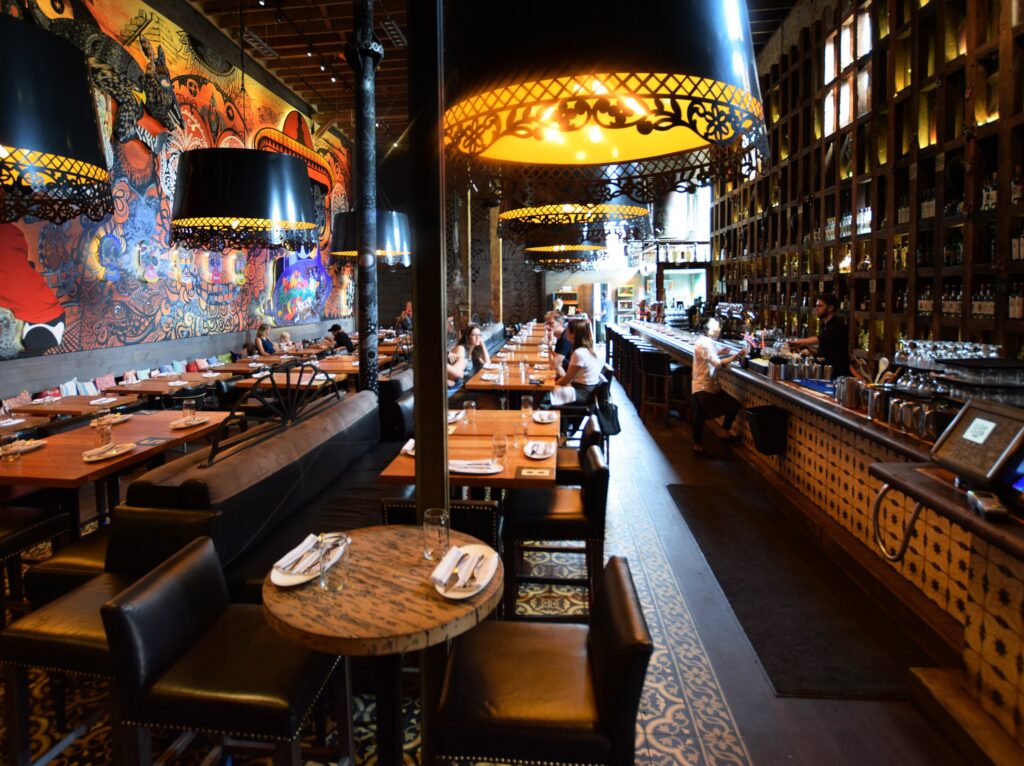
Photo: “El Catrin Mexican Restaurant - Toronto” by Mark, via Wikimedia Commons, licensed under CC BY 2.0; unchanged. Illustrative Toronto restaurant setting only; no endorsement or client relationship implied.
