
A hotel general manager job description in Canada often fails for a simple reason: it lists every department in the house and never says who the general manager actually answers to, or whether the property is full-service or select-service. Owners, asset managers and management companies then interview finalists against unwritten expectations, and the person who takes the seat discovers, in the first month, that the reporting line and the scope were not the ones on the page. A usable hotel general manager job description for a Canadian hotel should settle those two points before it lists the work.
This guide is for Canadian owners, asset managers, management companies and brand teams, including in Ontario, who are writing or revising the brief for a property-level general manager. It is not a job-seeker tip sheet, and it is not a search playbook. Lecours Group's hospitality recruiters start from a description that tells the truth about the reporting line and the scope of the house. How to run the search sits on our hotel general manager recruitment page. Questions for the panel sit on our hotel general manager interview questions guide. If the seat covers more than one property, use our hotel area general manager recruitment brief instead. Here, the focus is getting the description of a single-property seat right.
Reporting lines: owner, asset manager, management company and brand
Canadian hotel general managers often answer to more than one authority at the same time, and a description that names only "the owner" or only "the management company" is incomplete. Write the reporting line as it actually works. The owner, or the ownership entity, cares about asset value, capital, and the return the building is supposed to produce. The asset manager, where there is one, sits between ownership and the operation: they read the reports, challenge the forecast, and will call the general manager when the numbers or the capital plan are off. The management company, where the hotel is managed rather than owner-operated, is the general manager's employer in day-to-day terms: it sets operating process, approves the team, and holds the GM to a managed-hotel standard. The brand, on a flagged hotel, sets brand standards, inspections, and the guest-experience framework the house must deliver, and it can escalate when those standards slip. These four are not the same audience. A GM who is told only to "report to the management company" will still be on calls with the asset manager and on the hook for a brand audit.
The description should name the direct manager, the people the GM must keep informed, and the decisions the GM can make without a further approval. It should also say what happens when those authorities disagree, because they will. If the asset manager wants labour taken out of the building and the brand wants a service standard that requires that labour, the general manager needs to know who decides. Leaving that tension unwritten is how a first-year GM is set up to fail in the reporting line rather than in the house. Independent and owner-operated hotels are simpler on paper, and still need the line written down. If the GM reports to a principal, say so, and say which decisions stay with that principal. If a family office or a small ownership group shares authority, name the person who can actually give the GM an answer.
Full-service and select-service are different jobs
A full-service hotel general manager runs a house with a meaningful food-and-beverage operation, often including restaurants, banquets, and a more complete rooms and guest-services offer. The executive committee is larger. The GM is judged on rooms and on food and beverage, on group and transient business, and on how those departments work together. A select-service general manager runs a tighter house: a smaller team, a simpler food offer or none that the GM is expected to lead in depth, and a P&L that is more concentrated on rooms, labour and guest satisfaction. The judgement is still senior. It is not the same judgement. Descriptions go wrong when they use a full-service template on a select-service hotel, or the reverse. Write the outlets, the department heads who report to the GM, and the commercial mix of the house. Say whether the hotel is flagged or independent, because brand standards change the weekly work even when the building looks similar to an unflagged competitor down the road.
Scope also includes what the GM does not run. Some Canadian hotels place revenue, sales or culinary on a cluster or regional line, with the property GM as a partner rather than the sole owner of those functions. If that is the model, the description must say so. Otherwise a candidate will arrive expecting to own a department that actually reports elsewhere.
What else belongs in the description
Once the reporting line and the service level are clear, the rest of the description can be short and specific. Name the property type, the executive committee the GM leads, and the first-year priorities that are actually true: a ramp-up, a renovation, a brand conversion, a labour reset, or a year of steady operation. Include the Ontario or other provincial realities that will sit with the GM: employment standards, and, where they apply, liquor licensing, accessibility and any collective agreement. Success measures should be written as evidence the organisation will actually look at: the P&L the GM owns, guest and brand or owner measures, team stability in the department-head group, and the condition of the asset. Describe those measures clearly enough that a finalist can recognise the job; the specific targets belong in the confidential offer and the first-year plan. If the seat is a stepping stone to an area role, say that only if it is real; our hotel area general manager recruitment brief covers that different appointment.
Who is already writing hotel general manager descriptions
Finch Employment's page on hiring a hotel general manager in Toronto and across Canada is a recruiter's overview of what the GM does and how a search can be run. It notes that a branded GM answers to an owner or a management company and must meet brand standards, but it does not work through the four-way reporting line, and it does not treat full-service versus select-service scope as the organising problem of the description. Discover Tourism's hotel general manager career profile is a generic occupational sketch: the GM is the senior executive of a hotel or motel and might report to the owner or to executives of a parent chain. It does not distinguish Canadian reporting lines or separate full-service from select-service work. Diamond Hotels Management's general manager description is a property-specific brief for a dual-site operation in Kingston, with the GM reporting to a chief operating officer. It is a useful Canadian management-company example, not a general description of the seat. None of those pages is a Canadian owner's guide to writing the reporting line and the service-level scope before the search begins.
Common mistakes owners and asset managers make
- Listing every department and never naming who the general manager actually reports to.
- Writing "the owner" when the weekly authority is an asset manager, a management company, a brand, or all three.
- Using a full-service template on a select-service hotel, or the reverse.
- Leaving cluster or regional functions off the page, so the GM arrives expecting to own a department that reports elsewhere.
- Copying a description from another country, or from a different brand family, and changing only the hotel name.
Finish the reporting line and the scope, then use our hotel general manager recruitment and interview questions guides to run the appointment against that description. A strong general manager will not wait while the organisation debates unwritten authorities.
Frequently asked questions
Is this the same as your hotel general manager search guide?
No. The search guide is about how Canadian owners and asset managers find and assess a general manager. This guide is about writing the description of the seat, especially the reporting line and the service level, before that search is briefed.
What if our GM will also look after a second, smaller hotel?
Then you may be writing an area or cluster role, not a single-property description. Our hotel area general manager recruitment brief covers that appointment, and be honest in the document about how time and authority are split between the houses.
Do we need a different description for an independent hotel?
You need an honest one. An independent house may have no brand and no management company, and the owner or asset manager will then carry more of the weekly relationship. The description should still say who decides, and whether the hotel is full-service or select-service. Independence does not make those questions go away.
What a hospitality-rooted firm adds
Lecours Group helps Canadian owners, asset managers and management companies turn a vague sense of "we need a GM" into a hotel general manager job description that tells the truth about the reporting line and the house, and that a serious finalist can recognise. Review the hospitality clients we've placed for when considering organisations that trust us with hotel-leadership appointments.
Start a confidential conversation
If you need help writing a hotel general manager job description, or you are ready to brief a confidential search, tell us about the mandate through our find candidates page. We do not have a hotel general manager search open at the moment. We are currently recruiting a Director of Culinary / Executive Chef for a private golf and country club in London, Ontario, and you can review that search and our other current openings.
Our team has spent years appointing hotel leaders across Canada. Meet our recruiters and see who would support your process.
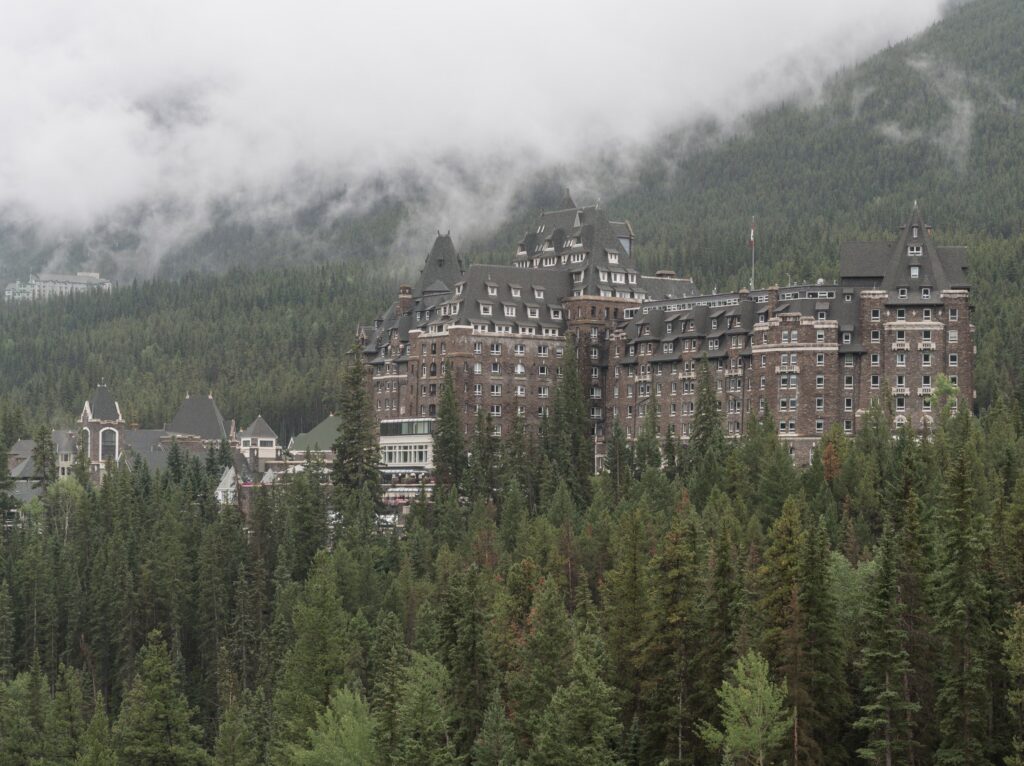
Photo: “Fairmont Banff Springs Hotel, north view 20240821 1” by DXR, via Wikimedia Commons, licensed under CC BY-SA 4.0; unchanged. Illustrative Canadian hotel setting only; no endorsement or client relationship implied.
