
Building services manager interview questions for a retirement residence have to test something most facilities interviews never touch: whether the candidate can keep a building safe, compliant and comfortable while people are living in it every hour of the day. A residence is a home first. The building services manager is responsible for life safety, fire readiness, mechanical systems, contractors and capital work, and they do all of it around residents who may be frail, anxious or living with dementia. This question bank is written for Ontario retirement residence operators and senior living groups across Canada who want to interview for that reality and know which answers to listen for.
Lecours Group's hospitality recruiters support senior living operators with leadership appointments in operations, culinary and building services. The questions below are employer-side questions, designed for a structured interview in which every finalist is asked the same core questions and scored against the same standard.
Agree on the scope before the interview
A panel can only judge answers against a role it has defined. Agree in advance whether the manager oversees one residence or several, which trades are in-house and which are contracted, who approves capital spending, and how on-call coverage works. For a full outline of the role's scope, see our building services manager job description guide. Decide, too, who on the panel will probe each area. The executive director will naturally focus on residents and families, so someone should be clearly responsible for testing the technical and regulatory answers.
Life safety and fire-code readiness questions
In Ontario, retirement homes are licensed and inspected by the Retirement Homes Regulatory Authority, and they must also meet Ontario Fire Code obligations, including an approved fire safety plan and regular drills. The building services manager is usually the person who keeps that work current. These questions test whether the candidate treats life safety as a daily discipline rather than an annual event.
- "Walk me through how you prepare a residence for a fire department inspection. What do you check first, and what records do you keep?"
- "Tell me about a fire drill that exposed a weakness. What did you change afterwards?"
- "How do you keep the fire safety plan current when staffing, layouts or resident needs change?"
- "Describe how you manage testing and maintenance for alarms, sprinklers, emergency lighting and door hardware."
- "What would you do if a contractor's work left part of the fire protection system out of service?"
Answers to listen for: a candidate who talks naturally about documentation, schedules and follow-through. They mention working with the local fire department and qualified service providers, training staff so that night shifts know their roles, and treating a failed drill as useful information. Strong answers include the idea of a fire watch or other interim measures when a system is impaired. Be cautious with answers that are vague about records or that treat inspections as something to pass rather than a picture of real readiness.
This section is general information, not legal advice. Operators should confirm current obligations with the RHRA, their local fire service and their own advisers.
Working around residents questions
Every repair, shutdown and renovation in a retirement residence affects people in their own homes. A manager who is technically excellent but careless with residents will generate complaints, family concerns and risk.
- "Tell me about a time you had to shut down water, heat or an elevator in an occupied building. How did you plan it and communicate it?"
- "How do you schedule noisy or disruptive work around resident routines, meals and activities?"
- "Describe a conversation you had with a resident or family member who was upset about a building issue."
- "How do you keep residents with memory care needs safe when doors, alarms or exits are affected by work?"
- "What do your team and contractors need to know before they enter a resident's suite?"
Answers to listen for: empathy backed by planning. Strong candidates talk about coordinating with the executive director and care team, giving residents notice in plain language, timing work around the daily rhythm of the home, and treating suites with the respect due to someone's private space. They can describe calming an upset family member while still being honest about what can be fixed and when.
Contractor and capital-project control questions
Much of the work in a residence is done by outside trades, and capital projects such as roof replacements, boiler upgrades or suite renovations can run for months. The building services manager is the owner's eyes on site.
- "How do you select, onboard and supervise contractors working in an occupied residence?"
- "Tell me about a capital project you managed from planning to closeout. What went wrong, and how did you handle it?"
- "How do you check that a contractor's work, permits and safety practices meet your standards?"
- "Describe how you build and defend a capital plan with senior leadership."
- "What do you do when a project starts to drift on schedule or scope?"
Answers to listen for: control without micromanagement. The candidate describes clear scopes of work, site orientation, permits and sign-offs, regular site walks, and documented changes rather than verbal side deals. They can explain how they prioritized capital needs by risk and resident impact, and how they communicated trade-offs to leadership. A weak answer leaves everything to the contractor or cannot describe a project in any real detail.
On-call leadership questions
Buildings fail at night and on long weekends. The building services manager is often the escalation point when a pipe bursts, power goes out or an alarm will not reset.
- "Tell me about the most serious after-hours call you have handled. What did you do in the first hour?"
- "How do you set up an on-call rotation so that it is fair to your team and reliable for the residence?"
- "How do you prepare a residence for a power outage or extreme weather?"
- "What do you expect your maintenance staff to handle alone, and when must they call you?"
- "After an emergency, how do you review what happened and share the lessons?"
Answers to listen for: calm, sequenced thinking. Strong candidates put resident safety first, then stabilizing the building, then communication with leadership, families and, where needed, regulators. They have thought about generators, emergency supplies and vendor contacts before the crisis. They also lead a team: they train people, trust them with clear limits and review incidents without blame.
A closing scenario
End with one scenario that draws the themes together: "It is a winter Saturday evening. A heating failure is affecting one wing, a contractor left a sprinkler zone isolated on Friday, and a family member is calling the front desk. What do you do?" A strong candidate will protect residents, address the impaired fire protection, call the right people and keep communication steady. Listen for priorities and judgement rather than a script.
Common interviewing mistakes
- Interviewing for a general facilities role and never asking about residents.
- Leaving fire readiness and documentation to a single question at the end.
- Relying on hypothetical answers instead of asking for real examples.
- Skipping the on-call conversation, then discovering a mismatch after the first emergency.
Frequently asked questions
Who should sit on the interview panel?
The executive director or general manager, a regional operations or facilities lead if you have one, and ideally someone from care or wellness who can judge how the candidate talks about residents.
Should candidates tour the building?
Yes. A short walk through mechanical rooms, common areas and the fire panel often tells you more than an hour of questions. Strong candidates notice things and ask good questions.
Where can I get help with the wider hiring process?
For support finding and appointing the right person, including the questions strong candidates tend to ask you, read about our building services manager recruitment for senior living.
What a hospitality-rooted firm adds
Lecours Group understands that a retirement residence is a hospitality business, a home and a regulated building at the same time. We help operators find building services leaders who respect all three. Review the hospitality clients we've placed for to see the organizations that trust us with these appointments.
Start a confidential conversation
If you are preparing to interview for a building services manager, or would like support with the full appointment, tell us about the role through our find candidates page. We are currently recruiting a Building Services Manager (#10889) for a senior living community in Mississauga, and you can see that role and our other current openings.
Our team has spent years appointing leaders across Canadian hospitality and senior living. Meet our recruiters and see who would support your process.
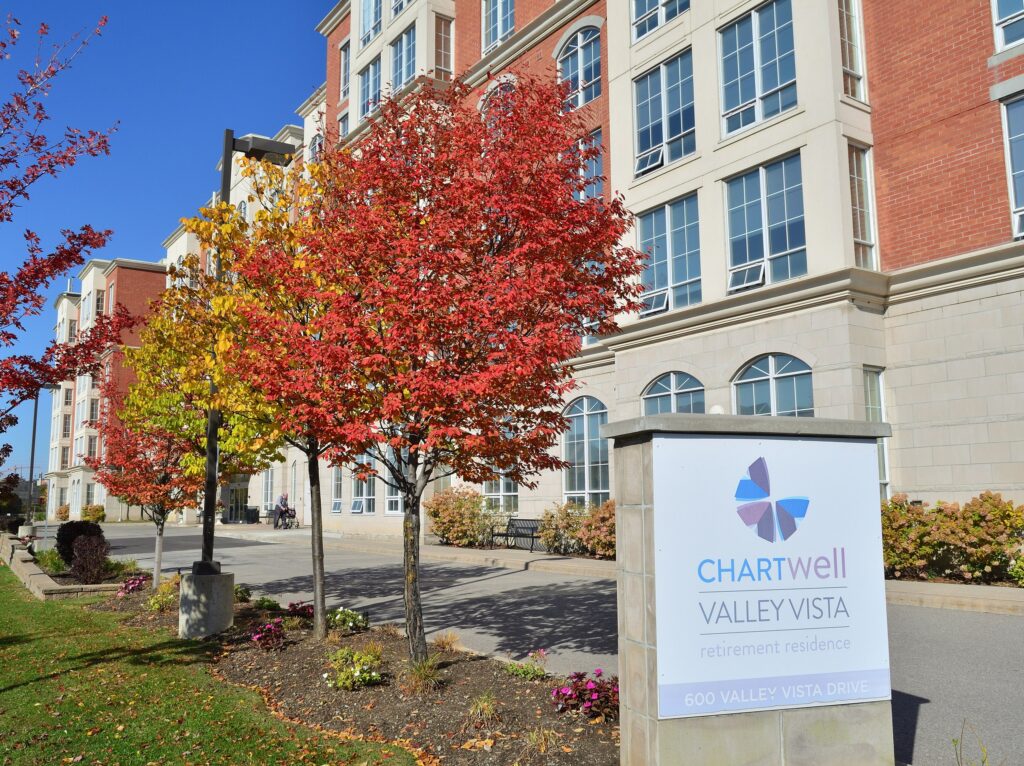
Photo: “Chartwell Valley Vista Retirement Residence, Vaughan” by Raysonho @ Open Grid Scheduler / Scalable Grid Engine, via Wikimedia Commons, released under CC0 1.0; resized. Illustrative Ontario retirement residence only; no endorsement or client relationship implied.
