
A director of food and beverage job description is one of the most important documents an owner or general manager writes, and one of the most often borrowed from somewhere else. The role looks similar on paper across properties, yet the real job changes sharply depending on who the director reports to, how many outlets and how much banquet business they oversee, and how responsibility is shared with the executive chef. This template is written for Canadian owners, general managers, asset managers and club boards who want a description that reflects their property, with notes on how the role differs between a hotel, a resort and a private club.
Lecours Group's hospitality recruiters help Canadian operators define and fill senior food and beverage roles. Use the sections below as a starting structure, then adjust them to the reality of your operation.
Role summary
Begin with two or three sentences that explain why the role exists and what success looks like. For example: "The Director of Food and Beverage leads all restaurant, bar, in-room dining and banquet operations, working in partnership with the Executive Chef to deliver an exceptional guest experience and strong departmental results. The role reports to the General Manager and is a member of the property's executive committee."
Adjust the wording for your setting. In a club, the summary might refer to members rather than guests and to the club's food and beverage committee. In a resort, it might stress seasonal volume and leisure groups.
Reporting line
Be explicit about who the director answers to, because it shapes the entire role.
- General manager. The most common line in hotels and resorts. The director is a senior member of the executive team and partners with the general manager on budgets and guest experience.
- Asset manager or ownership representative. In some owner-operated or independent properties, the director works closely with an asset manager who monitors performance on behalf of ownership. Say how often the director will report and in what format.
- Club general manager and board. In a private club, the director usually reports to the general manager but works regularly with a food and beverage committee made up of members. Clarify the committee's role so that candidates understand where advice ends and authority begins.
For a parallel view of how the top seat is defined in a hotel, see our hotel general manager job description.
Outlet and banquet scope
List every area the director is responsible for. Candidates use this section to judge whether their experience matches the size and complexity of your operation.
- Restaurants, lounges and bars, with a short description of each concept.
- In-room dining or room service, where relevant.
- Banquets, conferences, weddings and private events, including whether the director leads catering sales or works alongside a separate sales team.
- Seasonal outlets such as patios, pool bars, halfway houses on a golf course or ski-season venues.
- Stewarding, purchasing and receiving, if they sit under the role.
- Beverage programs, including wine lists and responsible service.
Describe scale in words rather than figures: a busy convention hotel, a boutique property with one signature restaurant, a club with member dining and a strong wedding season. That is enough for an experienced candidate to understand the job.
How the work splits with the executive chef
This is where many descriptions are vague, and where many working relationships later run into trouble. Spell out who owns what.
- Menus. The executive chef usually leads menu creation and culinary standards. The director typically contributes on concept, guest feedback, pricing strategy and beverage pairing.
- Costs. Clarify who is accountable for food cost, beverage cost and labour in each area. In many properties, the chef owns kitchen food cost and labour, while the director owns beverage cost, front-of-house labour and overall departmental results.
- Banquets. Define who leads event planning meetings, who signs off on banquet event orders and who resolves problems on the day.
- Reporting line between the two. In some properties the executive chef reports to the director; in others, both report to the general manager as peers. Say which model you use.
- Shared goals. Name the measures both leaders are judged on, such as guest or member satisfaction, departmental results and team retention.
A clear split helps you attract candidates who will work well with your current chef, and it reduces friction once they arrive.
Key responsibilities
- Lead daily operations across all food and beverage outlets and events, maintaining consistent service standards.
- Build, coach and retain outlet managers, banquet managers and front-of-house teams.
- Prepare and manage departmental budgets and forecasts, and report results to the general manager, ownership or club leadership.
- Develop concepts, promotions and beverage programs that strengthen guest or member loyalty.
- Ensure compliance with provincial liquor licensing, food safety and workplace health and safety requirements.
- Partner with sales and catering to grow group and event business.
- Respond to guest and member feedback and turn it into practical improvements.
How success will be measured
Close the responsibilities with a short note on how the director will be judged after the first year. Typical measures include guest or member satisfaction, departmental results against budget, the strength and stability of the management team, banquet and event feedback, and progress on any concept changes or renovations. Naming these up front helps candidates understand your priorities and gives you a fair basis for later conversations.
How the role differs: hotel, resort and club
Hotel
In a full-service hotel, the director usually manages several outlets, in-room dining and significant banquet and conference business. The pace is driven by occupancy and the group calendar, and the role often involves working within a brand or management company's standards.
Resort
A resort director manages seasonal swings, leisure guests, weddings and destination events. Staffing a seasonal team, housing considerations in remote locations and outlets that open and close with the seasons are often part of the job.
Private club
In a club, the director serves members who return week after week and expect to be known. The role involves close relationships with members, regular work with a food and beverage committee, and events that range from casual dining to formal galas and weddings. Diplomacy matters as much as operational skill.
Qualifications and experience
Describe the background you need rather than a long checklist. For most properties, that means progressive food and beverage leadership in a comparable setting, experience leading managers, strong financial management, and a record of developing teams. Mention formal education, wine credentials or bilingualism only if they genuinely matter for your property.
Keep the description free of pay details. For background on how employers approach the package for this role, see our food and beverage director pay guide.
Frequently asked questions
Should the executive chef report to the director of food and beverage?
Both models work. What matters is that the description states the structure clearly and that both leaders share goals.
How detailed should the outlet list be?
Detailed enough for a candidate to picture the operation. One line per outlet is usually enough.
Should a club involve its committee in writing the description?
Consulting the committee is wise, but the general manager should own the final document so the reporting line stays clear.
What a hospitality-rooted firm adds
Lecours Group helps owners, general managers and boards turn a general sense of what they need into a description that attracts the right food and beverage leader. Review the hospitality clients we've placed for to see the organizations that trust us with these appointments.
Start a confidential conversation
We are currently recruiting a Director of Culinary / Executive Chef for a prestigious private golf and country club in London, Ontario, leading member dining, banquets, weddings and private events across two kitchens. You can see that role and our other current openings. If you are ready to define or fill a food and beverage leadership role, tell us about it through our find candidates page.
Our team has spent years appointing food and beverage leaders across Canadian hospitality. Meet our recruiters and see who would support your process.
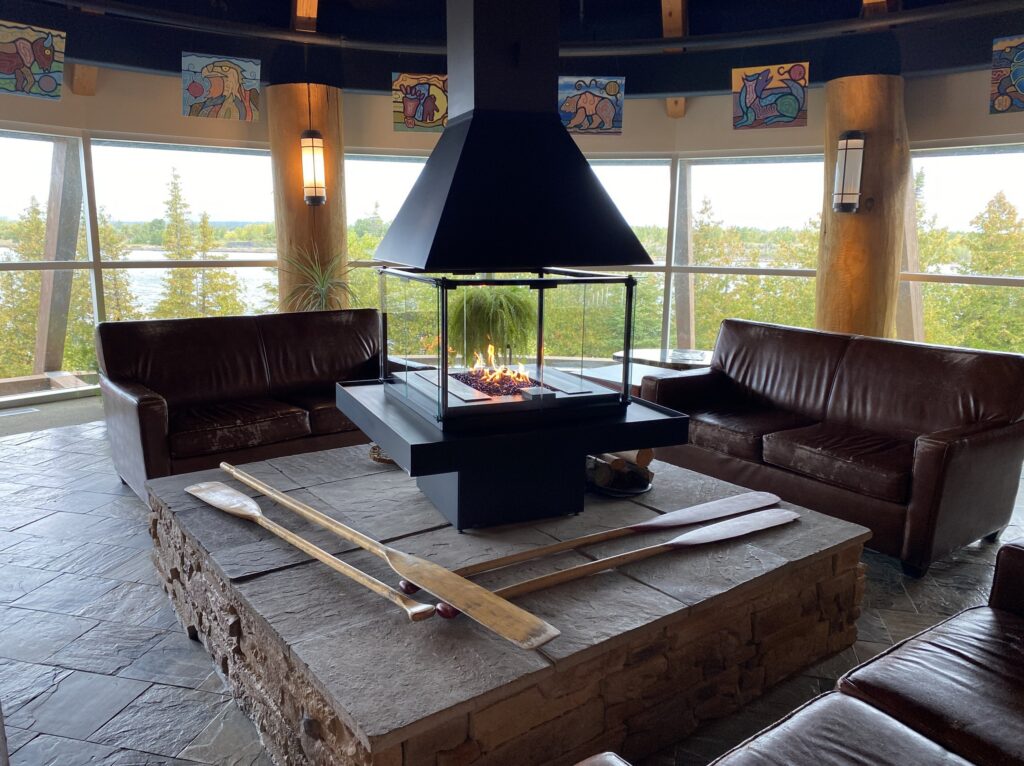
Photo: “Lobby Fireplace” by WabbitWanderer, via Wikimedia Commons, licensed under CC BY-SA 2.0; resized. Illustrative Ontario hotel lobby only; no endorsement or client relationship implied.
