
Ten years ago, racquets at many Ontario private clubs meant a few tennis courts, a teaching professional and a summer ladder. Today it can mean indoor and outdoor tennis, squash, pickleball, padel or platform tennis, junior academies, adult leagues, interclub teams and a calendar that runs all year. The leader who runs that operation is no longer just the head pro. At a growing number of clubs, the Director of Racquets is a senior department head responsible for one of the most active member communities in the building. Director of racquets private club recruitment should be run with that in mind.
This guide is for general managers, boards and racquets committees at Ontario and Canadian private clubs. It covers what the role owns, why good candidates are scarce, how to run a confidential search, and where a hospitality recruiters firm with deep club roots fits in.
Why racquets has become a leadership seat
Several trends have pushed racquets up the club's priority list.
- Younger families. Clubs recruiting younger members find that racquets and family programming are often what close the sale. A strong junior programme can be a membership strategy in its own right.
- Year-round participation. Indoor courts, squash and pickleball keep members coming through the winter, which matters in an Ontario climate where the golf season is short.
- New sports. Pickleball and padel have created demand that many clubs are still working out how to serve, often with tension between existing tennis members and newer players.
- Capital decisions. Court conversions, new indoor facilities and lighting projects need someone who can make the case to the board and manage the build.
US club consultants have written about the same shift. Horizon Hospitality's article “How is Your Private Club's Racquet Game?” is a useful prompt for boards asking whether their racquets operation has kept up with members.
What a Director of Racquets owns
The programme
Leagues, round robins, clinics, private lessons, junior academies, high-performance pathways, social events and interclub teams. The director designs the calendar and makes sure each group of members feels served.
The team
Teaching professionals, assistant pros, junior coaches, desk staff and seasonal staff. Recruiting and keeping good coaches is one of the hardest parts of the job, and one of the most visible to members.
Facilities and capital
Court surfaces, bubbles or indoor facilities, lighting, booking systems and equipment. The director works with facilities leaders and the GM on maintenance and on capital plans.
Revenue and budget
Lesson and programme income, pro shop sales, court fees and payroll. In many clubs the racquets department has its own profit and loss statement, and the director is accountable for it.
Member relations
Balancing the competitive player, the social player, the junior parent and the newcomer to pickleball takes diplomacy. Strong directors build committees and communication that keep those groups working together.
Why these searches are hard
- The pool is small. Ontario has relatively few senior racquets leaders who have run a multi-sport, multi-season club operation with a real budget.
- Great coaches are not always great directors. The skills that make a top teaching professional do not automatically include budgeting, hiring and committee work.
- The role is defined differently everywhere. Some clubs want a hands-on head pro with a bigger title; others want a department head who teaches very little. The search fails if the club has not decided which it needs.
- Candidates are loyal to their members. Senior racquets leaders often have long relationships with families at their current club. They need a clear reason to move, and a confidential approach.
- Specialist firms are mostly American. Firms such as McMahon Careers, which focuses on tennis and racquet sports director searches, and GSI Executive Search, which lists Director of Racquets among the positions it places, mainly serve the US market. Gecko Hospitality also recruits for private clubs. Canadian clubs looking for an Ontario-first search have fewer options.
How a confidential Director of Racquets search should run
- Decide the scope. Which sports, which facilities, how many staff, what budget and what reporting line? Is this a leadership role or a senior teaching role?
- Write the scorecard. What programmes must grow? What member problems must be solved? What would success look like after one full year?
- Map the market. We look at directors and senior professionals at Canadian clubs, at multi-sport facilities and at clubs abroad with Canadian ties, and approach them privately.
- Assess leadership, not just coaching. Interviews look at programme results, staff turnover, budgets, facility projects and how candidates have handled competing member groups.
- Involve the club carefully. Members of the racquets committee often want to meet finalists. We help structure that so it adds insight rather than politics.
- Close and onboard. We help agree start dates, relocation, teaching expectations and the handover plan.
How the seat fits with the rest of the club
The Director of Racquets usually reports to the GM or the COO and works closely with the membership, food and beverage, events and facilities leaders. Racquets events often drive dining and social revenue, and junior programmes often drive family memberships. A director who understands those links is far more valuable than one who sees racquets in isolation.
That is one reason we keep this role separate from our other club leadership guides. The Director of Racquets has its own talent pool and its own scorecard, even though success depends on working well with the rest of the leadership team.
What compensation conversations should cover
Packages vary by club size, the number of sports, teaching income and seasonality, and we do not publish ranges we cannot verify. At a large Ontario private club with a full year-round programme, the Director of Racquets is a senior, six-figure department head. The strongest candidates expect a clear discussion of base, bonus, teaching and programme income, professional development, benefits and how much time they will spend on court versus leading the team.
Common mistakes clubs make
- Hiring the most popular coach without testing their leadership and budget skills.
- Leaving pickleball and padel out of the role, then discovering they have become the biggest member issue.
- Running a search without agreeing what share of the role is teaching.
- Starting too late for the indoor or summer season and losing the best candidates to other clubs.
Questions to ask any firm
- Which racquets or tennis directors have you placed in Canada, and are they still in the role?
- How will you reach senior professionals who are not looking, without exposing them to their current club?
- How will you test budget, hiring and committee skills, not only coaching credentials?
- How do you handle a club where tennis, squash and pickleball members want different things from the new director?
Choose the firm whose recent placements look most like the leader you need.
What a hospitality-rooted firm adds
Lecours Group recruits across hotels, restaurants and private clubs. We understand member service, events and food and beverage as well as the department we are recruiting for. That helps us find racquets leaders who will build community across the whole club, not only on the courts.
You can review the hospitality clients we've placed for to see the kinds of organisations that trust us with senior hires.
A note on the US
Many racquets professionals have worked in the United States, and some Canadian clubs will consider candidates from there. We can support cross-border searches as a second tier, but our core network is Canadian, with Ontario at the centre.
Start a confidential conversation
If you are planning a Director of Racquets hire, or you are thinking about turning a head professional role into a true department-head seat, tell us about it through our find candidates page. We will treat the conversation as confidential from the first call. If you are a club leader exploring senior roles, including our private golf and country club setting in London, Ontario, take a look at our current openings.
Our team has spent years recruiting senior leaders across Canadian hospitality and private clubs. Meet our recruiters and see who would run your search.
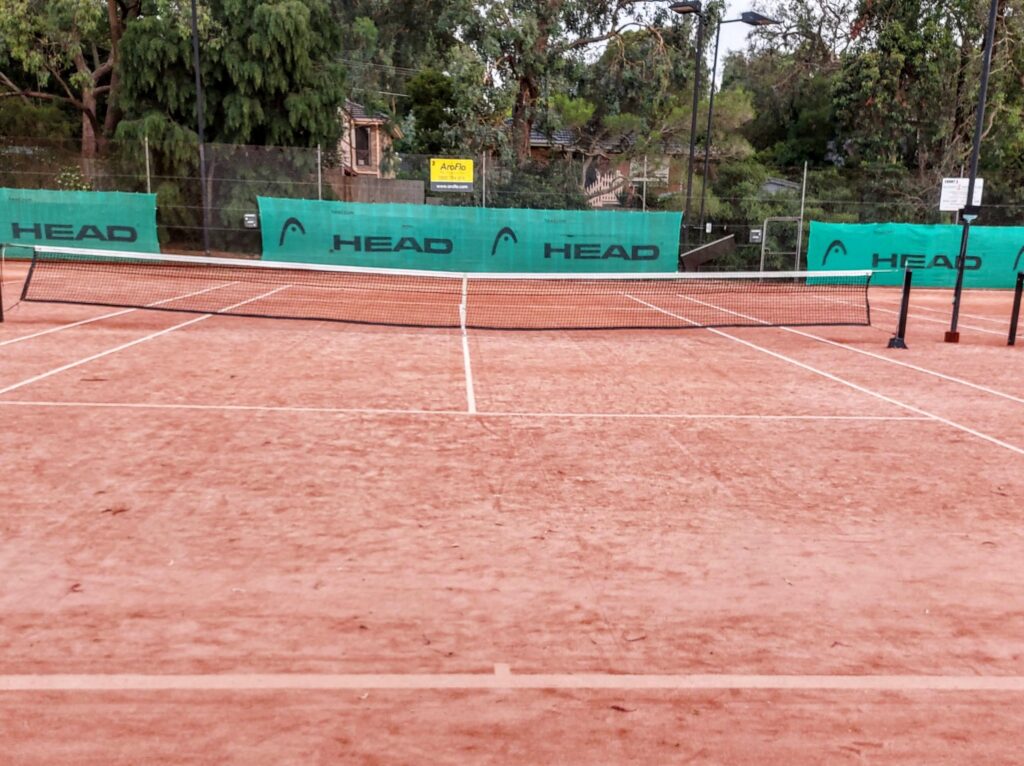
Photo: “Empty clay tennis court in Melbourne Australia looking down the middle” by KeepActive Australia, via Wikimedia Commons, licensed under CC BY-SA 4.0; cropped.
