
The best salesperson in a foodservice equipment showroom or a distributor's territory is rarely the one with the slickest pitch. It is the one a chef trusts to walk into the kitchen during prep, look at the line and say something useful. That is what makes foodservice sales recruitment different from general B2B sales hiring: the buyer is an operator under pressure, and credibility in the kitchen and the dining room is worth as much as a sales track record. This guide is for equipment manufacturers, dealers, distributors and suppliers selling into hotels, restaurants, clubs and institutional kitchens in Ontario and across Canada. It covers the roles, why operator credibility matters, how to assess it and how to run the search.
Who buys, and why it changes the hire
Canadian operators are buying carefully. Restaurants Canada's Q1 2026 Quarterly Report found that 91% of operators cite food costs and 87% cite labour as pressures, and the association's 2026 Foodservice Facts release puts the industry's average pre-tax margin at just 4.1% on sales of nearly $130 billion. An operator in that position does not want a catalogue. They want someone who can show how a combi oven reduces labour on a banquet, how a product change protects plate cost, or how a delivery schedule cuts waste.
That buyer is usually a chef, an F&B director, a purchasing manager or an owner, and often all four. Strong foodservice sales people speak each of their languages.
The foodservice sales roles we see most
- Outside sales representatives and territory managers for broadline and specialty distributors, opening and growing operator accounts.
- Equipment sales: manufacturers' regional managers, dealer sales consultants and kitchen design-build sellers who work with consultants, contractors and chefs.
- Culinary sales specialists: chefs who moved into sales and run demonstrations in the client's kitchen.
- Key and national account managers covering hotel groups, restaurant chains, contract caterers and buying groups.
- Regional sales managers and sales directors who lead territory teams and own distributor or dealer relationships.
If you are a food or beverage brand selling into foodservice rather than an equipment or distribution business, our guide for the consumer goods recruiter seat covers brand-side roles such as heads of foodservice and national accounts directors in more depth.
Why chef and operator credibility matters
Campbell Morden, a Canadian search firm, describes a case study in which a global commercial kitchen technology company expanding across Canada needed regional sales managers, key account managers and culinary professionals. Its conclusion is the clearest statement of the problem we have seen: "A strong salesperson without culinary credibility could struggle to connect with chefs. A culinary professional without commercial discipline might struggle to develop a territory. The company needed people who could do both."
In practice, operator credibility shows up as:
- Kitchen fluency: understanding workflow, stations, volume and how a busy line actually behaves.
- Cost literacy: talking plate cost, yield, labour minutes and energy, not just list price.
- Timing: knowing when not to call, which is during service.
- Peer respect: chefs and F&B directors take their calls because they have been on the other side.
Credibility alone is not enough. The hire still needs territory planning, pipeline discipline, negotiation and the stamina to prospect. The search is for both.
Where strong foodservice sales candidates come from
- Competitor and adjacent sales teams: distributors, equipment manufacturers and dealers, smallwares and disposables suppliers.
- Hospitality operators moving into sales: sous chefs, chefs de cuisine, kitchen managers, F&B managers and purchasing managers who want a commercial career.
- Contract foodservice managers who know institutional buying from the inside.
- Retail or general B2B sellers with strong process, when the role has a culinary specialist alongside them.
Generalist firms cover this market from different angles. MacDonald Search Group lists companies that "produce, distribute, and sell food into the hospitality sector" among its hospitality practice; Propulsion Recruitment, part of Groupe RP in Montreal and Toronto, covers the food industry from store roles to senior leadership. Our own work starts from the operator side: we know the chefs and F&B leaders who make credible sellers because we have recruited them into kitchens for decades. For the wider supply side, see our posts on food industry recruiters and prepared foods recruiters.
How to assess foodservice sales candidates
- A territory or account plan: give finalists a real (anonymised) territory and a short list of target operators, and ask for a 90-day plan.
- A kitchen walk: visit a client or partner kitchen together. Ask what they noticed and what they would recommend, and why.
- A demonstration or product conversation with a chef on your side of the table playing the buyer, including a hard objection about price.
- Pipeline evidence: how they track accounts, what their win rates and account growth looked like, and how they lost deals.
- References from customers, where appropriate and with the candidate's agreement, as well as from managers.
Our guide to the selection process explains how to keep these steps consistent across finalists, and our article on culinary expertise covers how to judge the craft side.
Scoping the role and the package
Before you search, agree the territory and travel, the account list, who owns key relationships today, language requirements (Quebec and national roles usually need French), the split between base and variable pay, car or mileage, and how quickly you expect the territory to grow. We do not publish salary figures for these roles in this article: we have not found a current, verified Canadian foodservice sales posting with a stated range that meets our standard, and packages vary widely with commission design and territory size. We share live market data with clients during a search.
Canada first, with a US lens
Many equipment brands sell across North America, and some Canadian territories report into US sales leaders. Canadian territories are larger, distributor networks are more concentrated and bilingual coverage matters in Quebec and for national accounts. Recruit for the Canadian map, and treat US candidates as a second tier unless the role covers both markets.
Frequently asked questions
Should we hire a chef or a salesperson?
Ideally someone who is both. If you cannot find that, pair a strong seller with a culinary specialist, and be clear about who owns the account.
How long does foodservice sales recruitment take?
A focused search usually takes several weeks from an agreed brief to an accepted offer, plus notice. Non-solicitation terms with a current employer can affect start dates and territory, so ask early.
Can Lecours Group recruit sales roles outside Ontario?
Yes. We recruit across Canada and selectively in the US. See our FAQs.
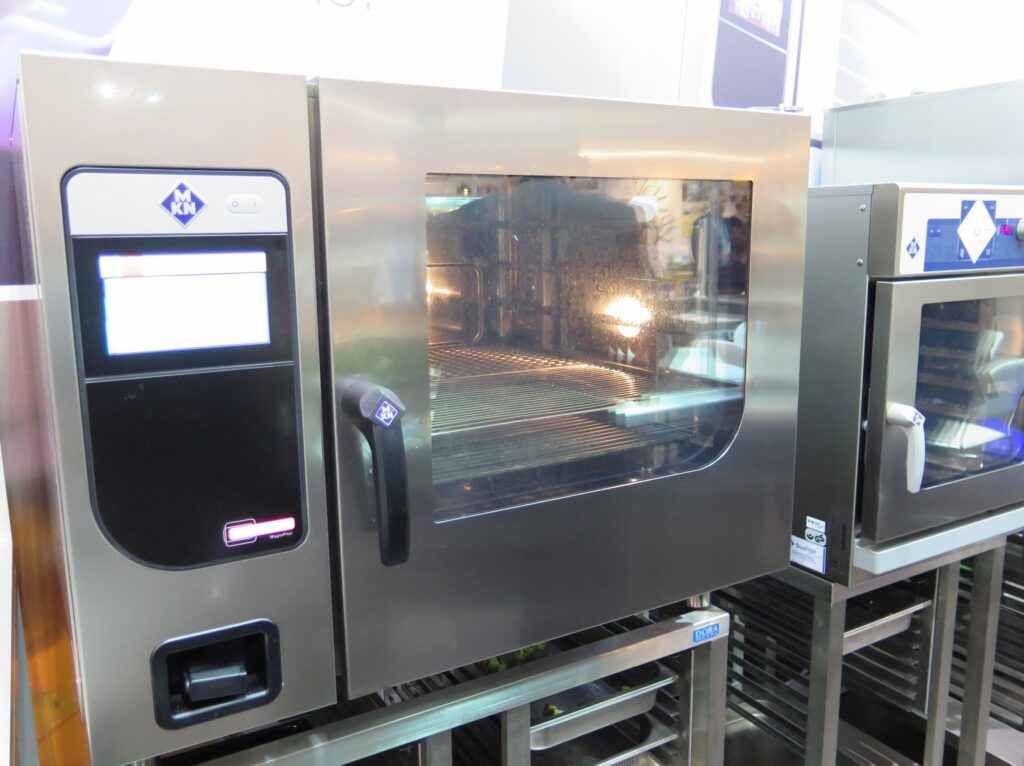
Hero image: "HORECA14 MKN piec konwekcyjno-parowy" by Travelarz, via Wikimedia Commons, licensed under CC BY-SA 3.0 PL; cropped.

Current opening: Outside Sales Representative, Markham ON
Lecours Group has recruited hospitality leaders since 1991, in Toronto and across Canada first and selectively in New York, Miami and Atlanta. We are currently recruiting an Outside Sales Representative (#10875) in Markham, Ontario, a strong fit for a seller with real credibility with chefs and operators. See the role and our other current openings on our find jobs page. Suppliers, distributors and equipment companies building a foodservice sales team can find candidates with Lecours Group or contact our team for a confidential conversation.
Written by the LecoursGroup executive search team. Meet our recruiters.