
Members notice facilities leadership when it is missing: an unreliable changing-room shower, a room that is too warm, a delayed repair or a building project that disrupts the calendar. When the department works well, much of that effort is invisible. Private club director of facilities recruitment should make the leadership behind that reliability visible from the start. The club is choosing someone to protect its buildings, organise its people and explain capital decisions, not simply the person most likely to fix the next breakdown.
This guide is for Ontario and Canadian club GMs, boards and search committees. Lecours Group's hospitality recruiters consider the relationship between building performance, presentation and member service when assessing the director's mandate.
Where this page fits
Our hotel Director of Engineering recruitment guide covers a different operating setting. This page concerns the private-club buildings and presentation seat: clubhouse systems, maintenance planning, capital work and, where assigned, housekeeping and laundry. The club should define that remit precisely rather than borrowing an entire hotel job description.
The director's boundaries with other departments should be explicit. Responsibility for a building system does not automatically mean responsibility for every activity that uses the building. Agree who owns room readiness, cleaning standards, event changeovers and equipment before the search begins.
What the director should own
Reliable clubhouse systems
Heating, ventilation, electrical, plumbing and other building services need planned attention. The director should know the asset base, understand recurring faults and maintain a clear route from a reported issue to a completed repair. Candidates should explain how they distinguish urgent problems from work that can be scheduled.
Preventive maintenance
A work-order system is useful only if the team uses it and the schedule reflects the building. Ask how the candidate has established records, assigned responsibilities and checked completion. A strong leader can explain what changed after preventive work became more disciplined, without pretending that every failure can be eliminated.
Presentation, housekeeping and laundry
Where these teams report to facilities, the director needs service leadership as well as technical knowledge. Members experience cleanliness, linen availability and the condition of shared spaces together. The brief should describe staffing, supervision and the standards expected across busy weekends and quieter periods.
Capital and contractor management
The director turns an asset assessment into a practical capital plan, seeks appropriate technical input and helps the GM explain priorities. Candidates should show how they have managed scopes, bids, contractors and change decisions. A project is not successful simply because it finished; its effect on operations and long-term maintenance matters too.
Team development and communication
Maintenance specialists and service teams need clear priorities and dependable leadership. The director must also communicate with colleagues who do not speak in technical terms. The best answer to a member-service problem often combines a repair plan with a temporary operating arrangement and a realistic update.
Why private-club experience changes the brief
A dues-funded club may need to explain a replacement project to members who have used the same building for decades. The director should be able to distinguish appearance, reliability and lifecycle risk without dismissing that attachment. They need to help the GM make choices understandable, not ask the board to approve an unexplained technical wish list.
The member calendar also constrains the work. A room may be available for a project only between events, while noisy or disruptive tasks need careful coordination. Candidates should show how they have worked with operations to protect service without repeatedly postponing essential maintenance.
What the wider search market shows
GSI's published Lakewood Country Club facilities profile is a useful US example of a combined mandate. It describes oversight of Building Maintenance and Housekeeping/Laundry teams, building maintenance systems, annual budgets and longer-term maintenance and capital plans. We cite it for role structure, not as proof that the search is still open or as Canadian pay evidence.
Horizon Hospitality lists Director of Facilities among its private-club roles, and Gecko Hospitality lists Facilities Director. The Ontario search still needs its own building inventory, support model and approved priorities. A title used elsewhere is a starting point, not a finished mandate.
Why these searches are harder than they look
- Technical skill is easier to see than leadership. A strong hands-on specialist may not yet have led multiple teams or managed a capital programme.
- The condition of the building can be unclear. Candidates need an honest account of known issues and deferred work, not a polished tour alone.
- The budget and authority may not match. A director cannot be accountable for reliability while every planned intervention is delayed indefinitely.
- The remit differs between clubs. Housekeeping, laundry, security coordination and technology support may report differently. Spell out the boundaries.
- Good leaders are often employed. A confidential approach helps them evaluate the opportunity without exposing their current position.
How a confidential search should run
- Review the asset picture. Gather available condition information, maintenance records, project plans and known operational constraints. Be candid about gaps.
- Define the mandate. Set the reporting line, department structure, contractor arrangements, budget authority and service expectations.
- Build the scorecard. Prioritise the experience the club actually needs: systems reliability, team leadership, housekeeping oversight or capital delivery.
- Map relevant candidates. Approach Canadian club and suitable member-service facilities leaders privately. Test transferable experience rather than assuming every large building is comparable.
- Assess evidence and judgement. Discuss past projects, competing priorities and team development. Use qualified technical support for areas requiring specialist assessment.
- Plan a supported handover. Agree access to records, contractor introductions, immediate priorities and the review rhythm with the GM.
Questions that reveal an effective director
Ask a finalist about a recurring system failure they inherited. How did they establish the cause, decide what could be repaired and explain the case for replacement? Look for evidence of diagnosis and prioritisation, not simply a story about buying new equipment.
Then discuss a hypothetical disruption before an important club event. Who needs to know, what temporary arrangements are appropriate and when does the issue require a decision from the GM? The candidate should connect technical response with service communication rather than treat them as separate tasks.
References should explore how the leader handled budgets, contractors and colleagues under pressure. Ask about the quality of handover records after a project and whether department supervisors became more capable. Obtain permission before reference contact and keep the candidate's interest confidential.
Common mistakes clubs make
- Hiring only for the immediate repair backlog while ignoring the longer-term leadership need.
- Expecting a director to perform every specialist task personally.
- Adding housekeeping and laundry without providing supervisory support.
- Withholding known building issues until late in the process.
- Approving projects without agreeing how disruption will be communicated.
- Judging performance only by emergencies resolved rather than failures prevented.
What compensation conversations should cover
A broad director mandate with capital and multiple-team responsibility may support a six-figure leadership package. We do not publish an Ontario range without verified evidence. Discuss base, any incentive, benefits, professional development, relocation and how after-hours responsibility is shared.
The support model matters as much as the title. Candidates need to know what can be handled in-house, what requires contractors and which decisions the director can make. A larger package cannot compensate for a mandate that is impossible to deliver with the resources provided.
What a hospitality-rooted firm adds
Facilities leadership protects the setting in which member service happens. Lecours Group looks for directors who can lead technically capable people while respecting the operational pressures of dining, events and shared spaces. That combination helps the GM turn competing requests into an organised plan.
Review the hospitality clients we've placed for and ask how the search would evaluate service judgement alongside building and capital experience. Our approach starts in Canada, with Ontario at the centre.
Start a confidential conversation
If you are planning a facilities leadership appointment, outline the building and team mandate through our find candidates page. Leaders exploring opportunities can review our current openings. This guide is not an advertisement for a facilities vacancy; the board's advertised roles have their own titles and requirements.
Our team has spent years recruiting senior leaders across Canadian hospitality and private clubs. Meet our recruiters and see who would run your search.
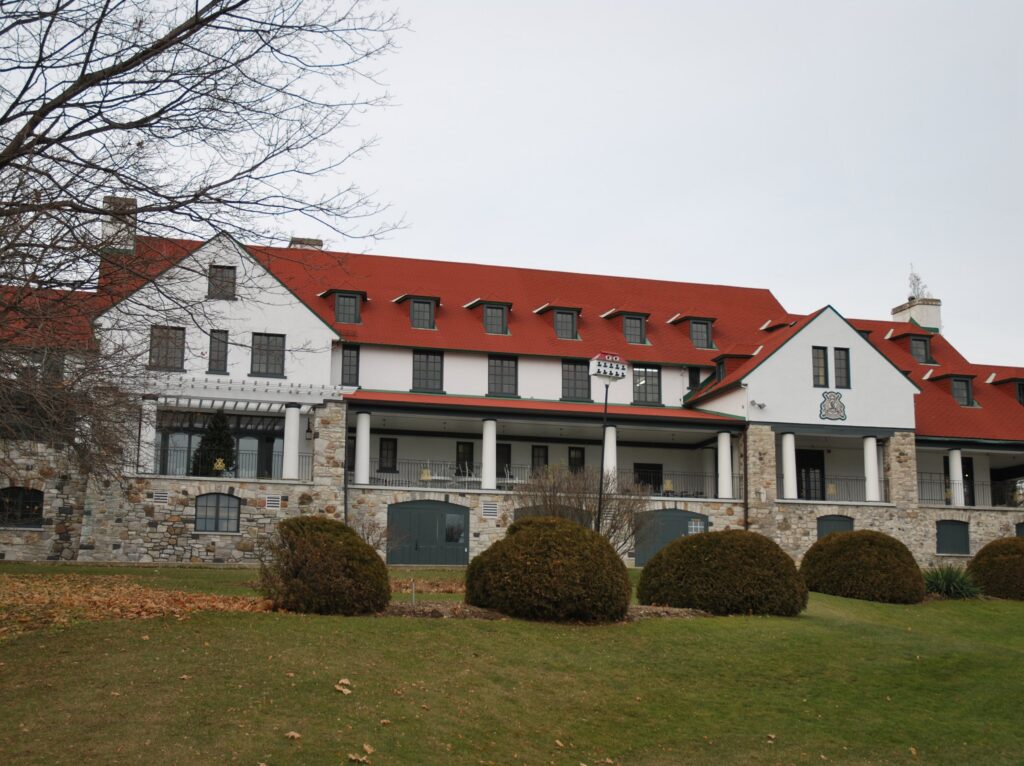
Photo: Beaconsfield Golf Club, Pointe-Claire, Quebec, by Anne-Marie Dufour / Parcours riverain - Ville de Montréal, via Wikimedia Commons, licensed under CC BY 2.0; unchanged. Illustrative Canadian clubhouse; no endorsement or client relationship implied.
