
Most restaurant manager interviews fail for a simple reason: operators ask charming questions and then wonder why the P&L still drifts after the hire. Restaurant manager interview questions for employers should test judgement under service pressure, not only personality. A recruiter's view of fine-dining front of house puts scorecards, a concrete financial scenario and disciplined reference checks at the centre of the process.
This guide is written for owners, restaurant groups and general managers assessing manager candidates in Toronto and across Ontario. It is not a job-seeker tip sheet. Lecours Group's hospitality recruiters use structured interviews so every finalist is measured against the same operating evidence.
Where this page fits
This page is about how employers interview and evaluate restaurant managers. For market and role context on Ontario openings more broadly, see our restaurant manager jobs in Ontario guide. For how Lecours Group runs a full confidential process end to end, read our selection process overview. Keep those pages separate from this interview playbook so each one stays useful for a different stage of the employer process.
If two interviewers leave the room with different definitions of "ownership," the process will reward the candidate who mirrored the last person they met. Align the panel first.
Build the scorecard before the first conversation
Do not invent criteria in the room. Agree in advance what the manager must own: guest recovery, labour control, wine or bar standards, reservation discipline, opening and closing routines, and the relationship with the kitchen. Weight the scorecard so a polished storyteller cannot outrank a quieter candidate with stronger evidence.
Restaurant365's guide to recruiting restaurant managers makes the same point from an operator systems angle: define success before the role is posted, then evaluate every candidate against that definition. In fine dining, add explicit rows for tasting-menu pacing, allergy communication and floor leadership when the room is full.
Core interview questions that reveal operating judgement
Guest recovery under pressure
Ask: "Describe a table that was about to leave unhappy. What did you do in the first two minutes, what did you protect for the rest of the room, and what changed afterward in training or process?" Listen for specific actions, not slogans about hospitality.
Labour and service trade-offs
Ask: "You are short two servers on a Saturday tasting-menu night. Walk me through how you redeploy, what you tell the kitchen and what you communicate to guests." Strong candidates talk about priorities and communication, not heroics.
Kitchen partnership
Ask: "Tell me about a disagreement with a chef during service. How did you resolve it without damaging the guest experience or the working relationship?" Fine-dining rooms fail when the floor and the pass stop trusting each other.
Standards and coaching
Ask: "Give an example of a captain or server you coached from inconsistent to reliable. What did you observe, what did you change and how did you measure it?" Development evidence beats generic claims about leadership style.
The P&L scenario every employer should run
Give candidates a simple, realistic scenario and the same numbers. Example: food cost is two points over target after a busy weekend, labour is slightly under, and guest scores dipped on ticket times. Ask them to investigate aloud. What reports would they pull first? Who would they speak to? What would they change this week versus next month?
Restaurant365 recommends a food-cost variance walkthrough for the same reason: systematic thinking shows up quickly when candidates cannot hide behind rehearsed answers. You are not testing accounting software fluency. You are testing whether the manager can connect guest experience to commercial cause and effect.
In fine dining, add one wine or beverage twist: a by-the-glass pour that is popular but eroding contribution. Watch whether the candidate protects guest experience while still naming a commercial correction.
Why structured interviews beat improvisation
Hospitality firms that emphasise structured interviews do so because first impressions are noisy. JWB Hospitality's note on structured interviews sits in that broader industry conversation: consistent questions make comparisons fairer and reduce the chance that a confident personality wins over a better operator. For employers, the practical rule is simple. Same scorecard. Same scenarios. Same reference standard.
- Write the questions before the day begins. Do not invent them between candidates.
- Score independently, then compare. Avoid groupthink in the debrief.
- Separate must-haves from preferences. A wine-focused room and a high-volume brasserie should not pretend they need identical evidence.
- Document decisions. If a finalist is declined, the notes should show operating reasons, not vague chemistry language.
Reference checks that actually help
Generic references produce generic praise. Ask previous employers how the candidate handled an underperforming server, a food-cost spike and a conflict with the kitchen. Ask what the person was like on a bad Saturday, not only on a calm Tuesday. With permission, speak to someone who worked beside them on the floor, not only someone who approved their vacation requests.
For fine-dining front of house, also ask how the candidate handled VIPs, media attention or allergy complexity. Those moments expose whether standards held when the room was watching.
A practical interview sequence for Ontario employers
- Screen for scope. Confirm concept fit, team size and P&L ownership before deep interviews.
- Structured first interview. Use the core questions above and score in real time.
- Scenario interview. Run the P&L and service-recovery cases with the same materials for every finalist.
- Floor or shadow conversation. Where practical, let the candidate meet key captains or the chef under controlled conditions.
- References, then offer. Do not skip references because the interview felt good.
Common mistakes employers make
- Asking only culture-fit questions and skipping financial scenarios.
- Letting each interviewer invent a different definition of the role.
- Confusing fine-dining polish with the ability to coach a team.
- Moving slowly after a strong final interview while the candidate is talking to other operators.
- Treating references as a formality instead of an evidence step.
Ontario employers should also decide in advance whether bilingual service, Smart Serve oversight or specific wine credentials are essential. Putting those requirements into the scorecard prevents a late surprise that wastes everyone's time after a strong interview day. Write the essentials down, share them with every interviewer and refuse to reopen the definition after a charming finalist appears.
The same discipline applies to scheduling. If the panel cannot complete a structured process within a competitive window, strong managers will accept another offer while your notes are still unfinished.
What compensation conversations should cover
Compensation belongs in a prepared conversation once mutual interest is clear. We do not publish Ontario pay figures in this guide. Discuss base, any performance arrangement, benefits and the real expectations around late nights and weekends. Keep the interview about operating evidence first so the search does not collapse into a negotiation before you know who can actually run the room.
What a hospitality-rooted firm adds
Lecours Group helps employers turn a vague "good with people" brief into a scorecard that protects both guest experience and commercial discipline. Review the hospitality clients we've placed for when considering organisations that trust us with senior front-of-house appointments.
Start a confidential conversation
If you need help designing interviews or running a restaurant manager search, tell us about the mandate through our find candidates page. If you are exploring leadership opportunities, review our current openings. As of this writing, the board includes Restaurant Manager #10836 in Toronto, a fine-dining front-of-house role that illustrates the kind of seat these interview questions are built to assess. This guide is not itself a vacancy advertisement.
Our team has spent years assessing hospitality leaders across Ontario. Meet our recruiters and see who would support your process.
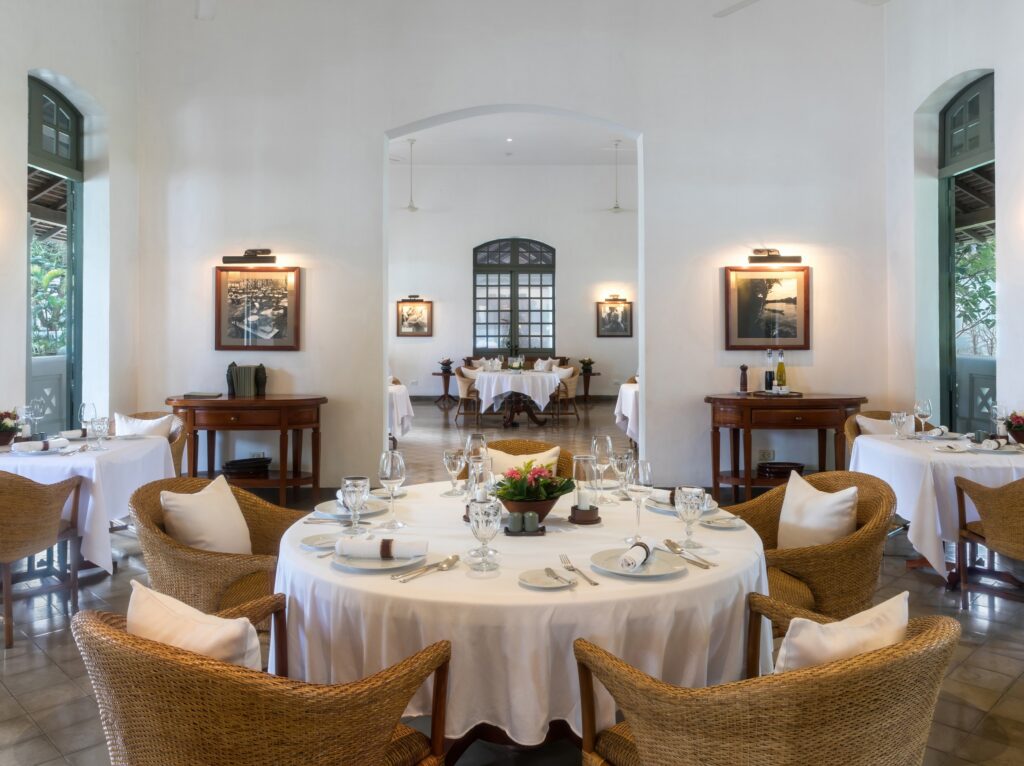
Photo: “Restaurant room of Amantaka luxury Resort & Hotel in Luang Prabang Laos” by Basile Morin, via Wikimedia Commons, licensed under CC BY-SA 4.0; unchanged. Illustrative dining setting only; no endorsement or client relationship implied.
