
A Canadian restaurant group can have a strong culinary idea and still fail in the restaurants if ingredients do not arrive on time, costs move without warning, or a single supplier interruption stops the menu. Restaurant supply chain director recruitment is the work of hiring the leader who can hold suppliers, inventory, logistics and the realities of the Canadian food market in the same brief. The seat sits between the restaurants and the companies that feed them, and it should be defined before you start calling candidates.
This guide is for CEOs, COOs and owners of Canadian restaurant groups who need a vice-president or director of supply chain. It covers cross-border sourcing, supply-managed dairy and poultry, and the dependence many groups have on a small number of distributors. Lecours Group's hospitality recruiters look for supply-chain leaders who understand restaurants, not only a warehouse network.
Where this page fits
This page is about the supply-chain leader inside a Canadian restaurant group. It is not a manufacturing-talent brief; for that neighbouring work, see food manufacturing recruiters. Keep that page linked but distinct, so this mandate stays on restaurants, menus and the suppliers that support them.
Titles vary: Vice-President of Supply Chain, Director of Supply Chain or Chief Supply Chain Officer. Agree whether the person will own supplier relationships, inventory, logistics, food safety with vendors, and cost in the restaurants, or only a narrower slice of that work. A leader who arrives to find that menu, finance and operations all make supplier decisions elsewhere will spend the first year negotiating the job instead of doing it.
What a Canadian restaurant supply-chain leader owns
Cross-border sourcing and a Canadian menu
Many Canadian groups buy ingredients, packaging and equipment that originate outside the country, while still having to run a menu that guests recognise as consistent. The leader should be able to explain how they have handled origin, lead times, duties, labelling and substitution when a preferred item was delayed or restricted. Ask for a specific example, including what the restaurants were told and how the plate changed, if it did.
The job is not to chase every imported product. It is to know which items truly need a cross-border path, which can be replaced with a Canadian alternative, and how much risk the group is carrying when the two are confused.
Supply-managed dairy and poultry
Restaurant menus in Canada lean heavily on dairy, chicken, turkey and eggs. Those products are supply-managed. The Farm Products Council of Canada describes supply management as a system that balances supply and demand through production quota, price setting and import control, and lists table eggs, turkey, chicken, broiler hatching eggs and dairy among the commodities that fall under it. Agriculture and Agri-Food Canada's dairy industry overview states that the Canadian dairy sector operates under a supply management system based on planned domestic production, administered pricing and dairy product import controls.
A supply-chain director does not need to recite policy for its own sake. They do need to know that volume, price and import availability in these categories do not behave like an open commodity market, and that a promotion, a new menu item or a sudden volume swing has to be planned with that system in mind. Ask how they have worked with suppliers and culinary leaders when a dairy or poultry item could not simply be swapped for an offshore alternative.
Distributor dependence
Many Canadian restaurant groups depend on a small number of broadline or specialty distributors to reach their locations. That can be efficient until a service failure, a shortage or a contract dispute lands in every kitchen on the same morning. The leader should be able to talk about how they have reduced that concentration risk, how they have managed a second source for critical items, and how they have held a distributor to agreed fill rates and quality without leaving operators to fight their own battles.
Use the word carefully and use it rarely: the issue is not "distribution" as an abstract function. It is whether the restaurants can get what the menu promises, at the quality and cost the business can stand.
Why these searches need discretion
- Capable supply-chain leaders are usually employed. A public posting may alert suppliers and competitors before you are ready.
- Vendor relationships are commercially sensitive. Incumbent agreements and cost conversations should not leak through a job advertisement.
- Menu and cost plans can move markets inside a small supplier community. Control the story until the board is ready.
- The Canadian talent pool is finite. Informal enquiries travel among foodservice, retail and restaurant supply-chain executives.
Who recruits for this seat
Osborne Search Partners, a Canadian firm, lists vice-president and director of supply chain among the food service seats it recruits, including leaders who manage food supply, cold-chain integrity and supplier relationships for food service operators. Wray Executive Search includes supply-chain executives among the senior leaders it recruits for foodservice operations. JRG Partners runs vice-president of supply chain search for CPG and food and beverage companies, with an emphasis on supplier performance, inventory, logistics and resilience; that is neighbouring market context, not a restaurant-group job description. Nigel Wright Group includes supply-chain leadership among the restaurant executive roles it places in the United States. Those pages are useful market context. They are not Canadian salary surveys, and they are not a live vacancy at your group.
Lecours Group keeps the brief Canadian: cross-border sourcing, supply-managed dairy and poultry, and distributor dependence should be in the scorecard from the first conversation, not added after a shortlist appears.
How a confidential search should run
- Audit the supply system. Review fill rates, cost movement, single-supplier exposure, dairy and poultry planning, and how operators escalate failures.
- Name the first-year problem. Cost, reliability, a menu redesign or a supplier transition each imply a different leader.
- Map employed talent. Consider restaurant-group supply-chain directors, foodservice supplier executives and adjacent food-industry leaders with genuine multi-unit evidence.
- Test judgement with real cases. Use a shortage scenario, a dairy or poultry volume change, and a distributor-failure case with the same materials for every finalist.
- Involve culinary and operations. A supply-chain leader who cannot work with chefs and operators will not last.
- Protect confidentiality. Limit names while supplier negotiations or leadership changes are in motion.
Questions that reveal judgement
Ask a finalist to walk through an item that ran out across several restaurants in the same week. What was the first signal, who did they call, and what did guests actually receive? Follow with a dairy or poultry example: a promotion or menu change that had to be planned inside a supply-managed category. Then ask how they have reduced dependence on a single distributor without creating a worse problem in the kitchens. References should include an operator or culinary leader as well as a commercial colleague.
Common mistakes groups make
- Hiring a manufacturing or retail supply-chain executive with no restaurant operating empathy.
- Writing a brief that ignores supply-managed dairy and poultry.
- Leaving distributor concentration unexamined until a failure hits the whole system.
- Letting culinary, finance and operations each brief the candidate differently.
- Treating the role as a cost-cutting function only, with no regard for menu quality or operator trust.
Before interviews begin, decide whether the first year is about reliability, cost, supplier transition or menu support. A candidate cannot repair all of those at once, and the panel should not pretend otherwise.
What compensation conversations should cover
A restaurant supply-chain director mandate may justify a substantial leadership package, but we do not publish Canadian figures without verified evidence. Discuss base, any performance arrangement, benefits and the travel reality of supplier and restaurant visits. Do not invent pay numbers, and do not import an American CPG posting as a Canadian budget shortcut.
What a hospitality-rooted firm adds
Restaurant supply chains only work when the plate can be delivered. Lecours Group looks for leaders who hold suppliers, Canadian market rules and operator trust in the same brief. Review the hospitality clients we've placed for when considering organisations that trust us with senior appointments.
Start a confidential conversation
If you are planning a restaurant supply chain director appointment in Canada, tell us about the mandate through our find candidates page. If you are exploring leadership or commercial opportunities, review our current openings. As of this writing, the board includes an Outside Sales Representative role in Markham (#10875) with a pastry and dessert company. That is a related current search in the Canadian food sector, not an advertisement for a supply-chain director vacancy.
Our team has spent years recruiting senior leaders across Canadian hospitality and food businesses. Meet our recruiters and see who would run your search.
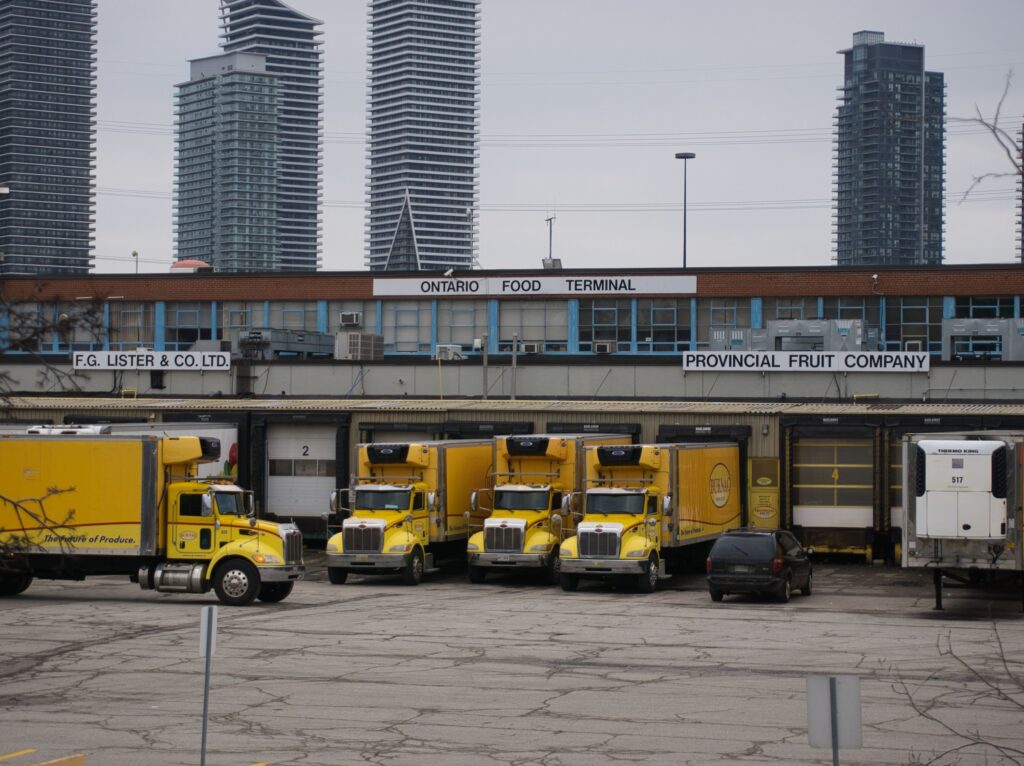
Photo: “Ontario Food Terminal, 2023” by Chicken4War, via Wikimedia Commons, licensed under CC BY-SA 4.0; unchanged. Illustrative Ontario wholesale food facility only; no endorsement, client or vendor relationship implied.
