
A retirement residence executive director is often hired as if the job were only a health-care administration post, then judged, once in the seat, as if it were a hospitality general manager role. Occupancy, dining and resident experience sit at the centre of the work, and the person has to carry them inside Ontario's retirement-home rules. Retirement residence executive director recruitment in Ontario should start with that reality, and it should be willing to look at hotel and club general managers who already know how to run a house, a team and a daily guest standard.
This guide is for owners, boards, regional operators and search committees at Ontario retirement residences and senior living communities. Lecours Group's hospitality recruiters treat the executive director as the on-site leader of a home that has to feel like hospitality while remaining a licensed, accountable operation.
Where this page fits
This page is about recruiting the executive director: the leader who owns occupancy, dining and resident experience, and who can be drawn from hotel and club general-manager ranks as well as from the senior living sector. It is not a dining-leadership brief; that subject is covered in our director of dining services recruitment guide. For operators who want to understand the hotel general-manager market they may be hiring from, see our hotel general manager recruitment page. Keep those neighbouring guides linked but distinct, so this search stays on the residence leadership seat.
The brief should name the actual community: licensed capacity, occupancy position, dining style, the mix of care services, and how the executive director works with regional or ownership leadership. A generic "senior living ED" description usually hides the hospitality standard the board will expect after the hire.
The executive director as a hospitality general manager
Occupancy is an operating result, not only a sales target
Occupancy pays for the home. The executive director should be able to read the inquiry and move-in pipeline, understand why families choose or leave, and hold sales, dining, care and building services to the same standard of readiness.
Ask candidates to describe a period when occupancy was under pressure and what they changed in the operation, not only in the marketing plan.
Dining is part of the resident experience
Meals are how many residents judge the quality of daily life, and they can also be one of the care services that bring a home inside the statutory definition of a retirement home. The executive director does not have to cook, but they do have to own the dining standard: menu rhythm, special events, how families are welcomed, and how the dining leader is supported. If meals are provided, the RHRA's licence-application guidance requires a food-handling certificate for at least one person involved in food preparation. That is a compliance minimum, not a description of a good dining room.
Resident experience is the daily product
The fundamental principle of the Retirement Homes Act, 2010 is that a retirement home is to be operated so that it is a place where residents live with dignity, respect, privacy and autonomy, in security, safety and comfort, and can make informed choices about their care options. The Residents' Bill of Rights in the same statute includes the right to live in a safe and clean environment where the resident is treated with courtesy and respect. Those are legal duties of the licensee. In practice, the executive director is typically the on-site leader who makes them true from breakfast through the evening.
This guide does not treat the executive director and the licensee as the same person. The licensee may be a corporation. The executive director still has to run a house that can stand up to that statutory standard when a family or an inspector asks what daily life is actually like.
Recruiting from hotel and club general-manager ranks
Some of the strongest candidates already run hotels or private clubs. They know occupancy, food and beverage, a visible service standard and how to lead a mixed team in a building that guests or members treat as their own. The translation into a retirement residence is real work: care partners, family dynamics, and Ontario's retirement-home rules all have to be learned or already understood. Test, in the interview, whether the person can make that move without losing the hospitality instinct you hired them for.
Be explicit in the brief if you are open to that path, including how regulatory and care support will work in the first months.
The Ontario regulatory frame the leader has to respect
The Retirement Homes Regulatory Authority administers the Retirement Homes Act, 2010 and licenses and regulates retirement homes in Ontario. As of July 1, 2012, homes that meet the definition of "retirement home" in the Act must have a licence from the RHRA to operate. The RHRA states that there are more than 700 licensed retirement homes in Ontario. Its licence-application page also distinguishes retirement homes, which are governed by the Act and are typically privately paid by residents, from long-term care homes, which receive government funding and are regulated by the Ministry of Long-Term Care.
Section 33 of the Act prohibits operating a retirement home without a licence. Section 60 requires the licensee to meet prescribed care and safety standards, including fire, safety and public health requirements, and to have an emergency plan and an infection prevention and control program. The executive director does not need to recite the statute in an interview, but they do need to show how they would keep the home inspection-ready without turning daily life into a compliance exercise.
Who is already writing about this seat
Dilys Search recruits executive directors for retirement and long-term care operators in Ontario and across Canada, and describes the role as carrying occupancy, resident experience, regulatory standing and a full team at once; the page is largely written for candidates registering for confidential mandates. Maxwell Management Group recruits executive directors and site leadership for healthcare and seniors' living organisations. Greenhouse focuses on seniors' housing and care and assesses executive director and general manager candidates. Personnel On Demand supplies interim and permanent executive directors and general managers for residences, including coverage through inspections and transitions. Those firms are useful Canadian market context, and most approach the seat from healthcare, seniors' living or staffing. This guide is written for employers who want the hospitality general-manager reading of the role, including candidates from hotels and clubs, with the Ontario statutory duties cited rather than assumed.
How the search should run
- Write occupancy, dining and resident experience into the brief. Name the current occupancy position, the dining model and what "a good day in the house" looks like.
- State whether hotel or club leaders are in scope. If they are, say how regulatory and care support will work in the first months.
- Map employed talent quietly. The strongest people are usually in a seat already.
- Test judgement with real scenarios. Use an occupancy dip, a family complaint, a dining failure and an inspection-readiness question.
- Check references against the house, not only against a title. Ask how the person held standards when census, staffing or families were under pressure.
- Protect confidentiality. Residents, families and staff should not learn the plan from a public advertisement.
Questions that reveal whether the mandate is real
Ask what would happen to occupancy if dining quality slipped for a month, and who the executive director would hold accountable. Then ask how the person would explain the Residents' Bill of Rights to a new department head in practical language, not as a poster on the wall. Follow with a pipeline question: where do they believe the next twenty move-ins will come from, and what part of the house has to be ready for those families. If those answers stay abstract, the brief or the candidate is not ready.
Common mistakes organisations make
- Hiring only from long-term care and then being surprised when the dining room and the front door feel institutional.
- Hiring a hotel or club leader with no plan for regulatory and care support.
- Writing a brief that never mentions occupancy or the resident experience.
- Leaving the relationship with ownership or the regional office undefined.
- Announcing a search before the board has agreed what "good" looks like in the first year.
What compensation conversations should cover
An executive director mandate may sit inside a leadership package, but we do not publish Canadian pay figures without verified evidence. Discuss base, any occupancy or performance arrangement, benefits, housing or relocation if relevant, and how after-hours responsibility is shared. Do not invent numbers for this guide, and do not import an American compensation report as a Canadian budget shortcut.
What a hospitality-rooted firm adds
Lecours Group works with Canadian hotels, clubs and hospitality-led operators, which helps when the brief has to attract a general-manager calibre leader and still respect Ontario's retirement-home rules. Review the hospitality clients we've placed for when considering organisations that trust us with senior appointments.
Start a confidential conversation
If you are planning retirement residence executive director recruitment in Ontario and want help with the mandate, tell us about the search through our find candidates page. If you are exploring leadership opportunities, review our current openings. As of this writing, the board includes Building Services Manager #10889 at a senior living community in Mississauga, a related current senior living search rather than an executive director vacancy. This page is not itself a vacancy advertisement.
Our team has spent years recruiting senior leaders across Canadian hospitality and related communities. Meet our recruiters and see who would run your search.
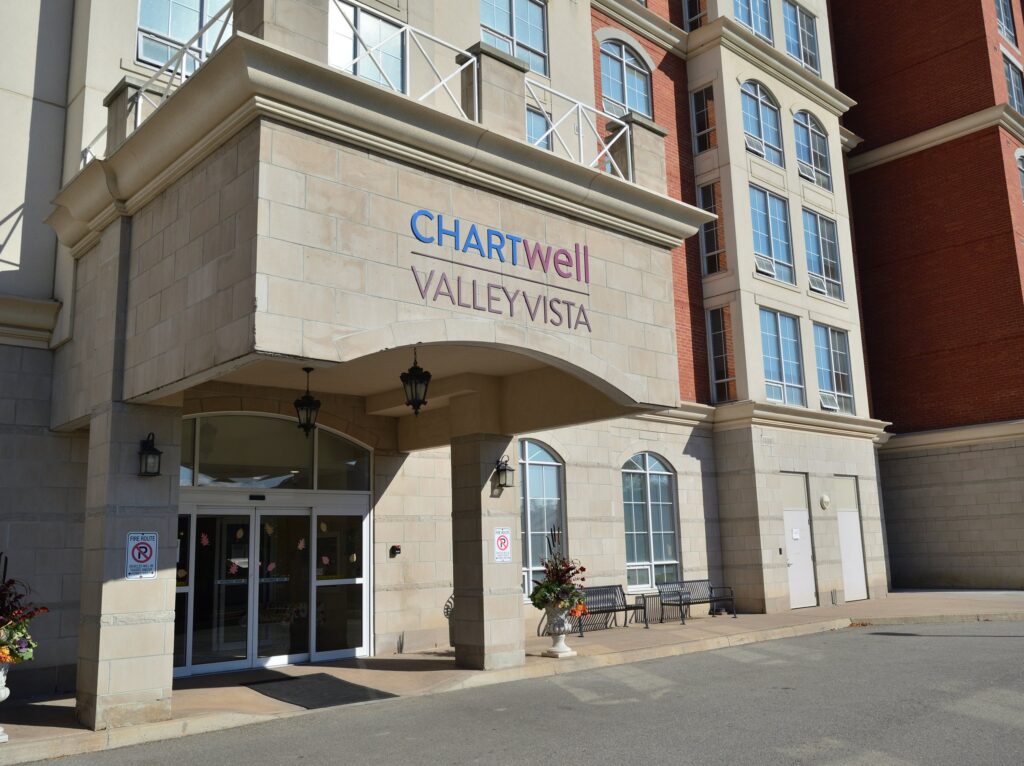
Photo: “Chartwell Valley Vista Retirement Residence, Vaughan, Ontario” by Raysonho, via Wikimedia Commons, dedicated to the public domain under CC0; unchanged. Illustrative Ontario retirement residence only; no endorsement or client relationship implied.
