
Every restaurant owner wants a winning team, but at the leadership level a winning team is not an accident of good hiring luck. It is a set of decisions about which seats matter, in what order to fill them, what to pay and how to find people who are already succeeding elsewhere. This guide explains how to build a winning team at the top of a restaurant group, with a Canadian focus: the core leadership seats, the order to hire them, what current survey data says they earn and when a retained search makes sense.
Start with the plan, not the org chart
Wray Executive Search, a US restaurant and franchise search firm, makes the point well in its 2026 leadership team guide: the common mistake is starting with the current organization chart and asking who to add, instead of asking what the business needs to achieve and which capabilities that requires. For a Canadian restaurant group, the plan usually comes down to a few questions:
- Are you opening new units in the next 12 to 24 months, or improving the ones you have?
- Is the bigger risk in operations (consistency, labour, guest scores) or in the food itself (menu, quality, cost)?
- Do you have a leader who can step into the owner's role when the owner is away?
The answers decide which seat to fill first.
The core seats of a winning restaurant leadership team
- General manager. The person who runs the restaurant as a business: P&L, team, guest experience and standards. In a single high-volume or upscale location, this is the most important hire you will make.
- Director of operations or regional manager. Once you have several units, someone has to run the GMs, set standards across locations and lead openings. Our restaurant director of operations recruitment guide covers that seat in depth.
- Culinary director. Owns the menu, recipes, food cost and kitchen leadership across the group. See our director of culinary jobs guide.
- Beverage leadership. In bar-forward or wine-led concepts, a beverage director can add real margin. See beverage director recruitment.
- VP of operations and support functions. As the group grows, finance, people leadership and marketing need senior owners too. Wray's guide stresses people leadership and financial leadership as rising priorities for restaurant executive teams.
What the market pays for these leaders
Gecko Hospitality's 2025 salary survey, based on more than 1,300 restaurant and hospitality leaders in the US and Canada, includes a Canadian restaurant section (the survey does not state the currency for that section):
- General Manager: an average of $98,500 in upscale casual and $88,500 in casual theme restaurants.
- Regional Manager: $122,000 in upscale casual and $108,500 in casual theme.
- VP of Operations: from $147,500 in fast casual to $173,500 in QSR.
Across the US and Canada combined, the same survey reports averages of US$112,500 for a Culinary Director and US$114,000 for a Director of Operations in restaurant management. It also found that General Manager was the most frequently hired restaurant leadership position in 2025, at 22% of candidates. For job-market context, see our look at restaurant jobs in 2025.
The order to hire in
There is no single right sequence, but most growing restaurant groups follow a similar path:
- Secure great GMs first. A director of operations cannot fix units without strong managers in them.
- Add a director of operations or regional manager once the owner can no longer visit every unit every week, typically around the third to fifth location or ahead of a growth plan.
- Bring in a culinary director when menus start drifting between locations, food cost is hard to control, or a new concept is planned.
- Build the executive layer (VP of operations, finance, people) when the group is large enough that the owner's own time is the bottleneck.
The exception is a turnaround: if the food is the problem, hire culinary leadership first; if execution is the problem, start with operations.
How to build a winning team that stays together
- Define decision rights. Who owns the menu, who owns labour and who signs off on openings? Wray's guide lists clarity on decision rights and accountability as a test of a working executive team.
- Hire for the next stage. Look for leaders who have scaled systems, not only run them. Experience growing a small group can matter more than a big-brand title.
- Balance operators and strategists. You need people who deliver every service and people who plan the next two years.
- Plan succession early. Every key leader should be developing someone who could step up.
- Pay to the level of the seat. The survey data above shows that multi-unit and executive roles sit at or above six figures; under-pricing a leadership role usually means a longer search and a weaker shortlist.
How you advertise matters too. Our guide to writing a restaurant job posting covers what strong candidates look for.
When to use a retained search
Postings work well for many roles, but the leaders who make a team win are usually employed, performing and not looking. A retained search makes sense when:
- The seat is senior (GM of a flagship, director of operations, culinary director, VP).
- The hire is confidential or replaces someone still in the role.
- You need someone who has done the next stage of growth before, for example opening units in a new city.
- You want the candidate assessed against the team you already have, not just the job description.
Lecours Group has recruited hospitality leaders since 1991, in Toronto and across Canada first and selectively in New York, Miami and Atlanta. Restaurant groups building their leadership team can find candidates with Lecours Group, see the hospitality clients we've placed for or contact our team.
Frequently asked questions
Who should a restaurant group hire first?
Usually strong general managers, then a director of operations or regional manager as the group grows. If food quality or cost is the main problem, a culinary director may come first.
How big should a restaurant leadership team be?
It depends on unit count and growth plans. A single location may need only a GM and a chef leader; a multi-unit group typically adds operations, culinary and support leadership in stages. More answers are on our FAQs page.
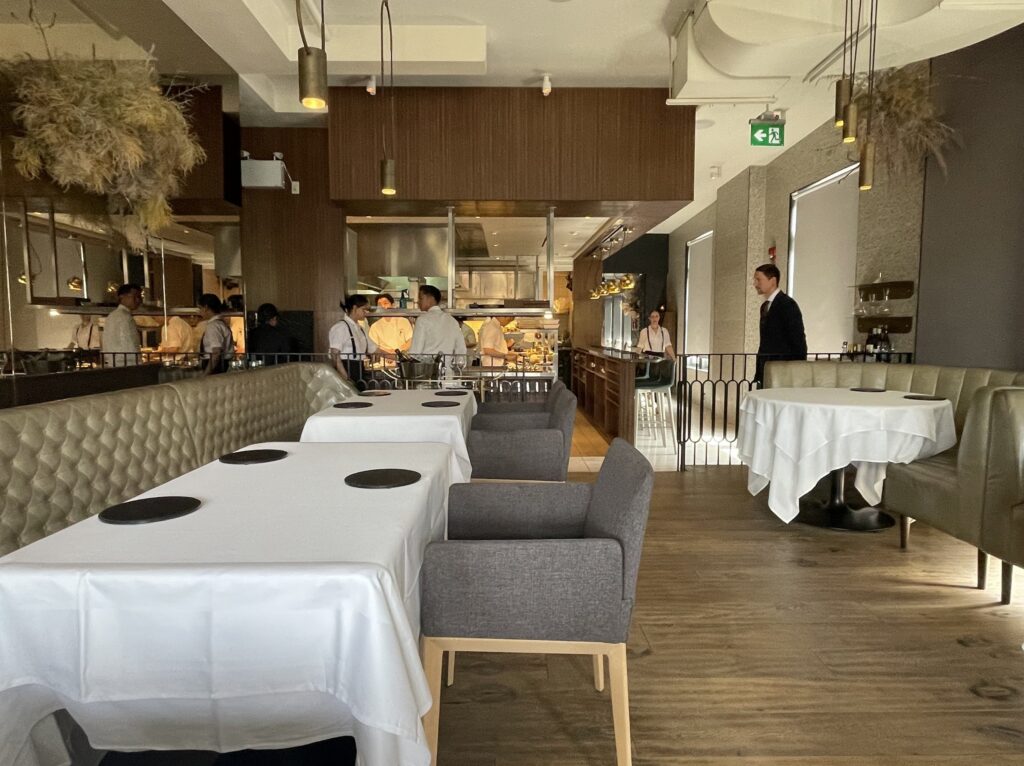
Hero image: "2024-0605 Alo restaurant" by Bobak Ha'Eri, via Wikimedia Commons, licensed CC BY 3.0.

Current opening: General Manager, Premium Quick Service, Waterloo ON
Lecours Group is recruiting a General Manager for a premium quick service restaurant (#10343) in Waterloo, Ontario, the kind of leader every winning team is built around: someone who owns the P&L, the team and the guest experience. Operators filling that seat can also read our guide to quick service restaurant general manager recruitment. See the role and our other current openings.