
Residents and families notice building services when something fails: a slow repair, a suite that is not ready, a heating problem or a fire drill that feels improvised. When the work is done well, much of it stays invisible. Senior living building services manager recruitment should treat the role as hospitality operations leadership in a home where people live, not as a generic maintenance posting. The manager protects fire and life safety, keeps heating, ventilation, air-conditioning and building-management systems reliable, and turns suites over quickly enough that occupancy revenue is not lost to empty rooms.
This guide is for operators, regional leaders and boards at Canadian senior living communities, especially in Ontario. Lecours Group's hospitality recruiters assess the seat as facilities leadership with a resident-experience standard attached to every system, work order and turnover.
Where this page fits
This page is about the building services manager in a senior living community: fire and life safety, HVAC and building-management systems, and the suite-turnover discipline that protects occupancy. It is not a private-club facilities brief; that subject is covered in our private club director of facilities recruitment guide. It is also not a hotel engineering brief; for that setting, see our hotel director of engineering recruitment page. Keep those neighbouring guides linked but distinct, so this search stays on the senior living building.
The mandate should be written around the actual community: the age of the plant, the fire and life-safety systems in place, the software used to run the building, and how quickly a vacated suite must be ready for the next resident. Borrowing an entire hotel or club job description usually leaves the occupancy and family-facing parts of the work undefined.
What the manager should own
Fire and life safety
In Ontario, licensed retirement homes sit inside a defined regulatory frame. The Retirement Homes Regulatory Authority, which administers the Retirement Homes Act, 2010, licenses homes and enforces the standards in the Act. The Act requires every licensee to comply with prescribed safety standards for the home, including standards with respect to fire, safety and public health requirements and emergency evacuation plans, and to have an emergency plan in place; those duties are set out in section 60 of the Retirement Homes Act, 2010. The same statute requires the licensee to post an explanation of the measures to be taken in case of fire, and to ensure that staff are trained in fire prevention and safety and in the home's emergency evacuation plan before they work in the home.
The RHRA's licence-application guidance is equally practical for a hiring brief. Applicants must be prepared to submit an approved fire safety plan, or a draft plan with proof that it has been submitted to the local fire department, and proof that sprinklers are installed and operational. The same page states that, under the Ontario Fire Code, all licensed retirement homes must be equipped with automatic fire sprinklers as of January 1, 2019. The manager is not usually the licensee, and this guide does not treat the two as the same person. The manager is typically the on-site leader who keeps those systems tested, documented and ready when an inspector, a fire official or a family member asks how the building actually works.
HVAC and building-management systems
Comfort in a senior living community is not a back-of-house detail. Uneven heating, poor ventilation or a building-management system that only one contractor understands will show up in resident complaints, staff workarounds and energy waste. The brief should say which systems the manager will own, which contractors they will direct, and how alarms, after-hours calls and seasonal changeovers are handled.
Ask candidates to walk through how they would take over an unfamiliar plant: what they would inspect first, how they would test whether the building-management system reflects reality, and how they would explain a capital repair to an executive director who has to justify it to families and ownership. A strong manager can translate technical risk into an operating decision.
Suite turnover that protects occupancy revenue
An empty suite earns nothing. The time between a move-out and a move-in is an occupancy problem as much as a maintenance problem. The manager should own a repeatable turnover standard: what "ready" means, how trades are sequenced, how deficiencies are caught before a family walks in, and how long a typical suite should take when the work is only refresh rather than renovation.
Build that standard into the interview. Ask for a recent turnover that ran long, what caused the delay, and what the manager changed afterwards. If the community is leasing up, opening a wing or running a high number of moves, say so in the brief.
Why the search should be confidential
- The best people are usually employed. A public posting can alert a competing community and unsettle your own maintenance team before the mandate is settled.
- Safety and capital issues are sensitive. Families and staff should not learn about a leadership change, or about a plant problem, from a job advertisement.
- The title varies. Comparable leaders may sit under building services, maintenance or plant operations, so a single posting title will miss people.
- Cross-sector candidates need a quiet approach. Strong hotel and club facilities leaders will not always be watching senior living boards.
Who is already writing about this seat
Maxwell Management Group, a Canadian firm that recruits for healthcare, seniors' living and non-profit organisations, lists building and maintenance among the leadership areas it covers, alongside executive directors and site leadership. Greenhouse Marketing's talent-acquisition practice focuses on seniors' housing and care and recruits leaders, department heads and health-care professionals, including executive director and general manager candidates. Both firms are useful market context. Neither publishes a dedicated employer guide to the building services manager in a Canadian senior living community. A Levante Living job posting that had been a rare public example of the title was gone when we checked it (HTTP 410), so it is not cited here.
Lecours Group keeps the brief Canadian and operational: fire and life-safety duties under Ontario's retirement-home rules, the HVAC and building-management systems in the actual building, and turnover speed as a protection for occupancy, not as an afterthought in a generic facilities description.
How the search should run
- Write the building into the brief. Name the life-safety systems, the age of the plant, the software used to run the building and the turnover standard.
- Separate licensee duties from the manager's mandate. Be clear what the on-site leader owns day to day.
- Map employed talent quietly. Look at senior living communities, hotels and clubs where a facilities leader already carries safety, systems and presentation together.
- Test judgement, not only tickets closed. Use a plant walk-through, a turnover scenario and a capital-repair explanation in the interview.
- Check references against safety and occupancy. Ask how the person handled inspections, after-hours failures and move-in dates that could not slip.
- Protect confidentiality. Limit the search to the people who can act on it.
Questions that reveal whether the mandate is real
Ask who owns the fire safety plan and how often it is exercised with staff who actually work the floor, not only with a binder on a shelf. Then ask how a vacated suite is handed from nursing or hospitality to building services and back again, and what "ready for move-in" means in hours, not in vague effort. Follow with a systems question: if the building-management platform failed on a holiday weekend, who would the manager call, and what would they do first. If those answers are fuzzy, the brief is not finished.
Common mistakes organisations make
- Writing a maintenance posting and hoping a building leader applies.
- Leaving fire and life safety in a binder that no interview ever tests.
- Treating suite turnover as housekeeping's problem alone, then wondering why occupancy slips.
- Hiring only from one sector and ignoring hotel or club leaders who already run complex buildings.
- Approving a search without agreeing who can authorise capital work or after-hours spending.
Before outreach begins, decide who can accept a start date and who will introduce the manager to residents and families. A candidate should not hear one version of the plant from operations and another from ownership.
What compensation conversations should cover
A building services mandate may sit inside a leadership package, but we do not publish Canadian pay figures without verified evidence. Discuss base, any after-hours or on-call arrangement, benefits, professional development, and how contractors versus in-house labour will be resourced. Do not invent numbers for this guide, and do not import an American compensation report as a Canadian budget shortcut.
What a hospitality-rooted firm adds
Lecours Group works with Canadian hotels, clubs and hospitality-led senior living operators, which helps when the brief has to respect both a living building and a resident-facing standard. Review the hospitality clients we've placed for when considering organisations that trust us with senior appointments.
Start a confidential conversation
If you are planning senior living building services manager recruitment and want help writing the mandate or approaching employed leaders, tell us about the search through our find candidates page. If you are exploring leadership opportunities, review our current openings. As of this writing, the board includes Building Services Manager #10889 at a senior living community in Mississauga, a direct example of the seat this guide is written to fill. This page is not itself a vacancy advertisement; the live role has its own requirements.
Our team has spent years recruiting senior leaders across Canadian hospitality and related communities. Meet our recruiters and see who would run your search.
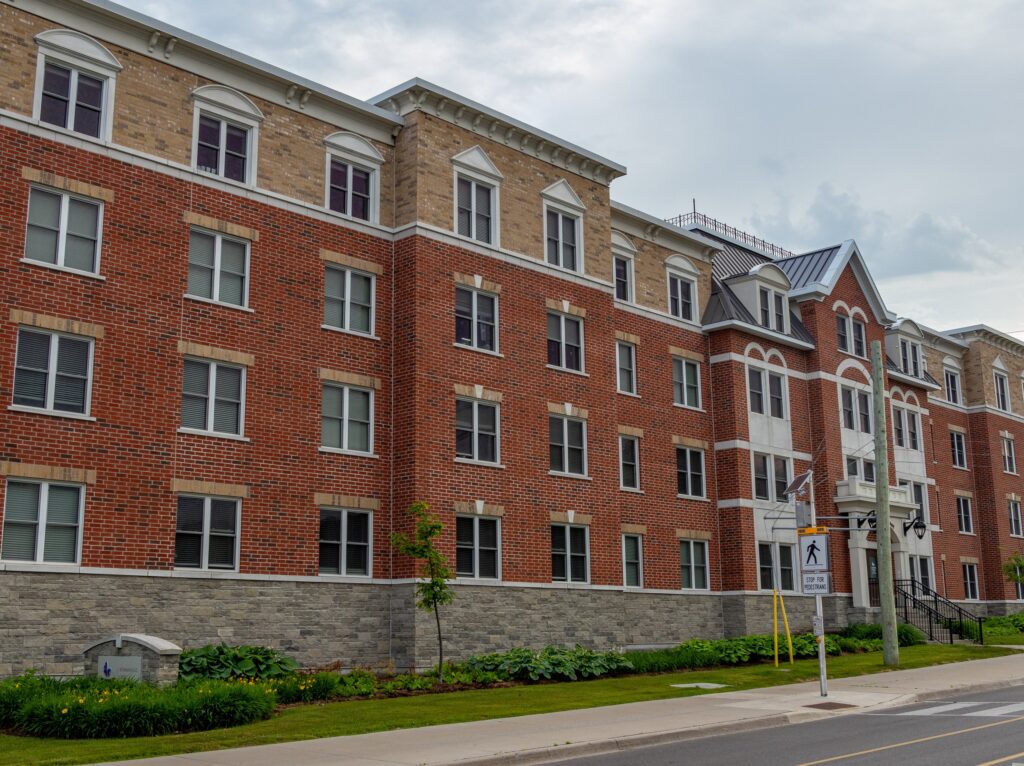
Photo: “Chartwell Bowmanville Creek Retirement Residence, June 21 2025” by Dillan Payne, via Wikimedia Commons, licensed under CC BY-SA 4.0; unchanged. Illustrative Ontario senior living residence only; no endorsement or client relationship implied.
