
A club general manager job description often fails for a simple reason: the board recycles a US chapter template, leaves the reporting line vague and then cannot use the document either to evaluate the incumbent or to brief a search. A club general manager job description for a Canadian board should state the GM/COO model the club actually uses, name the reporting line to the board and the president, and set out KPIs that will feed the annual review and, when the time comes, the search brief. This page is a template for employers, not a candidate advertisement and not a geographic mandate brief.
This guide is for club presidents, boards and appointment committees writing or refreshing the general-manager description at a Canadian private club. Lecours Group's hospitality recruiters help boards turn a vague "run the club" note into a description the next president can still use. For a golf-club mandate in a particular market, see our golf club general manager search in Ontario guide. When the board is ready to interview, use our private club general manager interview questions. The seats around the general manager are covered in our private club assistant general manager recruitment and clubhouse manager recruitment pages.
Where this page fits
This page is an employer template for the general-manager role. It is not an interview playbook, and it is not a search brief for a particular club type or market. Keep those neighbouring pages linked but distinct, so this description stays on the job itself.
If two directors cannot agree what the general manager owns, you are not ready to post the role or to review the person already in it.
Start with the model: general manager or GM/COO
Canadian clubs use more than one leadership model. In some clubs the general manager is the board's single operational leader and department heads report through that seat. In others the title is GM/COO, which should mean the same thing: one operational agent of the board, with authority that matches the accountability. What the description must not do is give the general manager the title and then allow committees or individual directors to supervise department heads on the side.
Write the model down. State that the general manager is responsible for the club's operations and for the working relationships among the board, members, employees and, where relevant, the community. State that department heads report to the general manager, and that committees advise the board and the general manager rather than managing staff. If the club still uses a clubhouse manager, an assistant general manager or a separate head of golf operations, say how those seats report, so the description does not collide with those roles.
Name the reporting line to the board and the president
The description should say that the general manager reports to the board, usually through the president or the chair, and is the board's only operational employee at that level. It should say how often the general manager attends board meetings, what the board expects in the written pack, and that advice to the president is candid, including when the news is unwelcome.
It should also say what the general manager does not report to. A membership committee, a house committee or a past president may have views. They should not become a second reporting line. If the club wants the general manager to sit as an ex-officio member of specified committees, name those committees and the limit of that role.
When the president changes, the reporting line in the description should still be accurate. That is why the line is to the office and to the board, not to a named individual.
Write KPIs that can feed the review and the brief
A description that lists duties but no measures will not help the annual review, and it will not help a later search brief. Choose a short set of KPIs the board can actually see, and write them as outcomes rather than as slogans.
A practical Canadian set often includes:
- Financial stewardship: delivery of the approved operating and capital budgets, with early advice when the outlook changes. Do not put pay figures in the description; put the accountability there.
- Member experience: dining, events, athletics or other core amenities, measured by evidence the club already collects rather than by a single loud table.
- Membership health: usage, proposals, resignations and wait-list movement, reported honestly to the board.
- People leadership: stability and development of department heads, including the culinary, clubhouse and, where the club has them, golf or racquets leaders.
- Asset and risk stewardship: condition of the property, safety, and compliance with applicable Canadian and provincial requirements.
- Board support: quality and timeliness of reporting, and a working relationship with the president that survives a change of officers.
These KPIs should reappear in the annual review and, if the club later goes to market, in the search brief. If a measure cannot be reported, do not put it in the description.
A working outline for the description
Boards can adapt the following outline rather than starting from a foreign template:
- Purpose: the general manager is the board's operational leader, responsible for running the club to the standard the board has set.
- Reporting: reports to the board through the president; department heads report to the general manager.
- Scope: operations, people, finances, member experience, property and risk, and advice to the board.
- Authorities: spending within the approved budget, hiring and performance management of staff below board level, and the right to pause a committee request that would break a policy or a budget, pending a board decision.
- Duties: a short, ordered list rather than a dump of every task in the clubhouse.
- KPIs: the measures above, reviewed at least annually.
- Relationships: president, board, committees, members and department heads, with role clarity for each.
- Qualifications: senior club, hotel or comparable hospitality leadership, with evidence of board-level reporting. Do not write a description that only a single personality could fill.
Attach the description to the employment agreement when the appointment is made, and date the version the board has approved. A description that lives only in last year's search folder will not govern the year ahead.
Who is already publishing job descriptions
US CMAA chapter files are the documents most boards find first. The GSCCMAA general manager description treats the general manager as chief operating officer, reporting in practice to the board, administering board policy, directing department managers and making financial reports to the directors. The Texas CMAA Ogden Golf and Country Club description has the general manager report directly to the board, with emphasis on clubhouse operations, budgets and communication with the president. The Florida CMAA Oakwood Country Club GM/COO description is written for a privately owned US club, with the GM/COO reporting to ownership and balancing member experience with financial discipline. Those files are useful as market context. None of them is a Canadian board template that sets the GM/COO model, a reporting line to the board and president, and KPIs designed to feed both the annual review and a later search brief. That is the work this page is for.
Common mistakes boards make
- Copying a US description and changing only the club's name.
- Giving the general manager accountability without authority over department heads.
- Writing duties with no KPIs, or KPIs the club cannot report.
- Leaving the reporting line as "works closely with the board."
- Never updating the description after a new president takes office.
Frequently asked questions
Should the assistant general manager or clubhouse manager appear in this description?
Yes, but only as reporting relationships. Write their own descriptions separately, and use the pages linked above when those seats are the ones you are filling.
Does a job description replace the employment agreement?
No. The description should be attached to the agreement and kept consistent with it. The agreement covers term, notice and review; the description covers the work and the measures.
Can we use this as a posting?
You can adapt it, but a posting is a public notice with its own rules. This template is for the board's internal description, the review and the brief.
What a hospitality-rooted firm adds
Lecours Group helps boards turn a borrowed template into a Canadian description that the annual review and a later brief can actually use. Review the hospitality clients we've placed for when considering organisations that trust us with senior club appointments.
Start a confidential conversation
If you need help writing a club general manager job description or briefing a confidential appointment, tell us about the mandate through our find candidates page. If you are exploring leadership opportunities, we are currently recruiting a Director of Culinary / Executive Chef for a private golf and country club in London, Ontario. Review that search and our other current openings. That culinary mandate is a live example of a senior club search, not a general-manager vacancy. This guide is not itself a vacancy advertisement.
Our team has spent years writing briefs and descriptions for Canadian club boards. Meet our recruiters and see who would support your process.
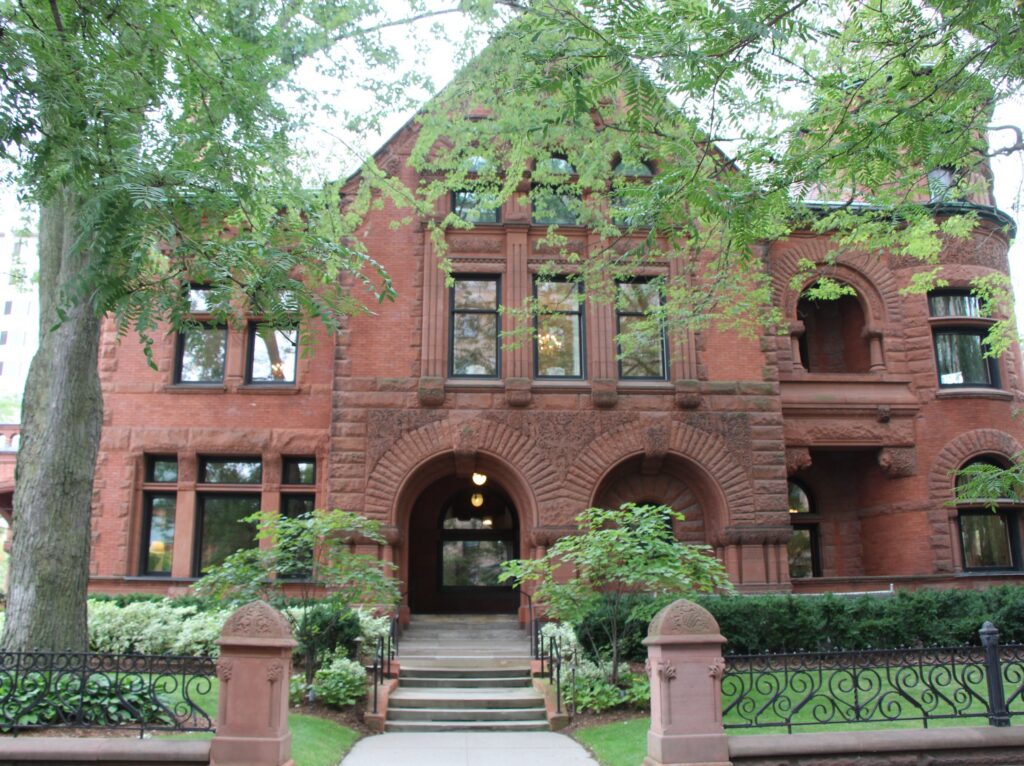
Photo: “135 St George Street (Toronto)” by Thomas1313, via Wikimedia Commons, licensed under CC BY-SA 4.0; unchanged. Illustrative Toronto private club setting only; no endorsement or client relationship implied.
