
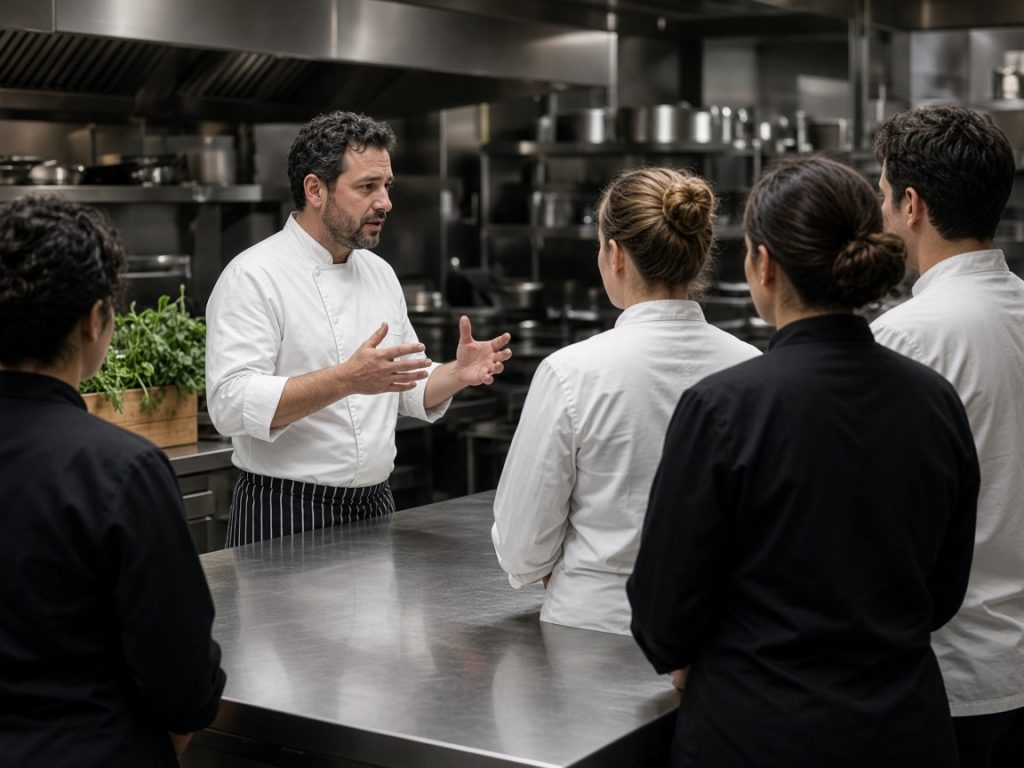
A clear chef de cuisine job description is the foundation of a successful kitchen hire. The chef de cuisine runs the kitchen day to day: executing the menu, leading the brigade and protecting food cost every service. A vague description attracts the wrong applicants and leaves everyone unsure what success looks like. This article gives employers a ready-to-adapt template, explains how the role differs from neighbouring positions, and shows how to use the description throughout the hiring process. For senior kitchen searches, executive search hospitality recruiters often start from a description just like this one.
What belongs in a chef de cuisine job description
A good description answers four questions: what the role is for, what the person will do, what they need to bring, and what they'll get. It should be specific enough that a candidate can picture their first week, and measurable enough that you can assess performance at six months.
Officially, the chef de cuisine title falls within the broader chefs occupation. The Ontario labour market profile for chefs (NOC 62200) lists chef de cuisine alongside titles such as sous chef, banquet chef and chef de partie, and describes chefs as planning and directing food preparation in restaurants, hotels, hospitals, central commissaries, clubs and similar establishments. The same profile lists a minimum of two years of post-secondary education.
How the role differs from neighbouring positions
- Culinary director or executive chef: sets culinary strategy across outlets or properties, owns the overall budget and often sits on the leadership team. The chef de cuisine usually reports to this person in larger organizations.
- Chef de cuisine: owns one kitchen's execution, team and results. In a single-unit restaurant, this may be the top culinary role.
- Sous chef: second in command, running shifts and stepping in for the chef de cuisine when needed.
For context on the senior end of the path, see our guide Mastering the Kitchen.
Chef de cuisine job description template
Copy and adapt the sections below. Replace the bracketed text with your details.
Position summary
[Venue name], a [concept, e.g., private club / chef-driven restaurant / hotel dining room] in [city], is seeking a Chef de Cuisine to lead daily kitchen operations. Reporting to the [Culinary Director / General Manager], the Chef de Cuisine will deliver consistent, high-quality food across [number] covers per day, develop the kitchen team, and meet agreed food and labour cost targets.
Key responsibilities
- Lead all kitchen operations during service, ensuring consistency, timing and presentation standards
- Develop and cost seasonal menus in collaboration with [Culinary Director / ownership]
- Manage food cost to a target of [x]% and kitchen labour within budget
- Recruit, schedule, train and evaluate kitchen staff; build a clear progression path for cooks
- Order and receive product, manage supplier relationships and control inventory
- Maintain food safety and sanitation standards in line with provincial and municipal requirements
- Plan and execute events, banquets or private dining as required
- Work with front-of-house leadership on guest feedback and service flow
Qualifications
- [x]+ years of progressive culinary experience, including [x] years in a sous chef or senior leadership role
- Culinary diploma or Red Seal certification preferred
- Proven track record of food cost control and menu costing
- Experience leading a team of [x] or more
- Food handler certification (or ability to obtain it)
- Strong communication skills and a respectful leadership style
What we offer
- Salary of $[x] to $[y], plus [bonus / benefits / meals]
- [Schedule details, e.g., five-day week, two consecutive days off]
- Professional development budget
- [Other benefits: health coverage, education, parking]
Success measures (first 12 months)
- Food cost at or below target for [x] consecutive months
- Kitchen turnover reduced to [x]%
- Guest or member satisfaction scores at or above [x]
- At least one cook developed for promotion
Setting the salary range
Publish a range that reflects the scope of the kitchen. In Lecours Group's placement experience, senior culinary leadership roles in clubs, hotels and restaurant groups commonly carry total compensation above $100,000 a year, often with a performance bonus and benefits. As a published example, Canoe in Toronto posted its chef de cuisine role at $80,000 to $95,000 a year plus shared gratuities. Pay is driven by covers, the number of outlets, event volume, team size and cost accountability. Benchmark against peer venues, or talk with Lecours Group, and spell out the benefits in your description.
Tailoring the description to your setting
Private clubs
Add member-facing duties: attending house committee meetings, hosting themed dinners and managing seasonal staffing. Lecours Group is currently recruiting a Chef de Cuisine for a private club in Toronto, a good example of a role where member relations matter as much as technique.
Hotels
Include multi-outlet coordination, room service and banquet support, plus brand standards and reporting systems.
Independent restaurants
Stress creative input and the chance to shape the menu. Be clear about how much autonomy the role actually has, since mismatched expectations are a common reason chefs leave.
Using the description throughout hiring
- Posting: Use a shortened version that leads with the opportunity and pay range.
- Screening: Turn qualifications into a simple checklist.
- Interviews: Ask behavioural questions based on each responsibility.
- Tasting: Build the brief around your actual menu and cost targets.
- Onboarding: Turn the success measures into the first 90-day and 12-month goals.
If you'd like help running the search, our food and beverage recruiters page explains how we work and how fees are structured. You can also read more on chef recruitment in our related articles.
Common mistakes in chef de cuisine descriptions
- Listing every task in the kitchen. A long list of duties hides what actually matters. Focus on outcomes and the handful of responsibilities that drive them.
- Leaving out the reporting line. Candidates want to know who they answer to and how much autonomy they'll have.
- Omitting pay. Descriptions without a range get fewer qualified applicants and waste time in negotiation.
- Copying a corporate template. Generic language makes a distinctive kitchen sound like every other one. Describe your food, your team and your standards.
- Ignoring growth. Strong chefs de cuisine want a path forward. Mention development opportunities or a route to culinary director where one exists.
Getting these details right signals to candidates that the kitchen is well run before they ever walk through the door.
Treat the description as a living document. Revisit it with your new hire at their six-month review and adjust the success measures as the kitchen evolves.
Frequently asked questions
Should the job description mention the menu style?
Yes. Naming the cuisine, price point and service style helps candidates self-select and saves interview time. A chef who thrives in tasting-menu fine dining may not want a high-volume brasserie, and the reverse is also true.
How often should we update the description?
Review it whenever the role becomes vacant and at least once a year, especially after a concept change, renovation or expansion. An outdated description leads to misaligned expectations and difficult performance conversations.
Is it better to list hours or keep them flexible?
Give a realistic weekly pattern. Chefs expect evenings and weekends, but transparency about average hours and days off builds trust and attracts candidates whose lifestyle fits the role.
Hire your next chef de cuisine
Lecours Group has helped hospitality employers hire culinary leaders since 1991. Find candidates, contact us to discuss your role, or, if you're a chef, explore current opportunities. Chefs can also browse chef jobs near you.