
A restaurant manager job description for Toronto is often written in a hurry: a list of duties, a hopeful tone and no way to compare two finalists once interviews begin. Full-service employers need a clearer brief. The document should describe the seat in a dining room that runs lunch and dinner, cover guest recovery and team leadership, and sit beside a hiring scorecard. If the role will be advertised to the public, it also has to follow the current Ontario rules for publicly advertised postings.
This guide is written for owners, general managers and restaurant groups hiring a manager for a full-service dining room in Toronto. It is not a job-seeker tip sheet, and it is not legal advice. Lecours Group's hospitality recruiters use a written brief and a scorecard so every candidate is measured against the same operating work. For a wider look at the Ontario market, see our restaurant manager jobs in Ontario guide. For how to run the interview once the brief is set, see our restaurant manager interview questions.
A template for a Toronto full-service restaurant manager
Do not leave the following blocks empty. Name the reporting line, the outlets the person will own, and the decisions they can make without a second conversation.
Position summary. The restaurant manager is the on-site leader of a full-service dining room in Toronto, responsible for daily service, guest experience, the front-of-house team and close coordination with the culinary team and, where there is one, the general manager.
Reporting and scope. State who the manager reports to, who reports to the manager, which dining rooms, bars or private rooms they own, and whether they hold opening or closing authority, cash and deposit responsibility, and scheduling authority. If the restaurant is part of a group, say what is decided in the room and what is decided centrally.
Service and guest experience. Lead pre-shift briefings, floor presence and table visits. Own reservation pacing, wait-list judgement and recovery when a table, an allergy or a complaint goes wrong. Set the standard for service, product knowledge and the tone of the room, including wine or bar service where that is part of the offer.
Team leadership. Hire, schedule, train and coach front-of-house staff. Handle performance issues promptly. Build a bench so a Saturday night does not collapse when one supervisor is away. Work with the culinary team so the floor and the kitchen are running the same service.
Operations and financial discipline. Own labour planning, inventory or beverage controls, cash reconciliation, and the daily and weekly numbers the owner or general manager expects to see. Say that the manager is accountable for the operating results of the room. Do not put pay figures, wage medians or a sample range into this template. If you advertise the role publicly, state the expected compensation or the range of expected compensation in the posting itself, in the form the law requires, without using this page as a source of numbers.
Compliance and house standards. Maintain food-handling, alcohol-service, workplace-safety and accessibility standards that apply to a Toronto dining room, and close a problem rather than only report it. Name any certifications required on day one, and any you will support after the start.
Hours and presence. Be honest. A full-service Toronto manager works evenings, weekends and peak calendar dates. Say so, and say how time off is actually handled.
Qualifications. Ask for leadership experience in a full-service or comparable dining room, evidence of team leadership under service pressure, and comfort with the financial and guest-recovery work described above. Do not write a Canadian-experience requirement into a publicly advertised posting or its application form, as discussed below.
A hiring scorecard to sit beside the description
Before you interview, agree how you will mark candidates against the work described above. A simple one-to-five card is enough, with a short evidence note under each mark:
- Service leadership and guest recovery in a full-service room.
- Team hiring, coaching and scheduling under peak pressure.
- Financial and operating discipline: labour, beverage or inventory controls, and a clean close.
- Judgement working with the culinary team and, where relevant, a general manager or owner.
- Presence and communication with guests, staff and ownership.
Write scores before the group debrief. A four or five requires a concrete example, not a confident tone. Use the same card for every finalist, and let the interview questions on our neighbouring page test these areas.
Ontario rules for publicly advertised postings
If you will advertise this role to the general public, follow the current requirements under the Employment Standards Act, 2000. Ontario's official guide to requirements related to publicly advertised job postings, updated on February 24, 2026, sets them out. The rules generally apply to postings made on or after January 1, 2026. The official guide and Ontario Regulation 476/24 are the sources to rely on; this section only restates rules that were in force when this page was checked in November 2026.
The posting requirements do not apply to an employer that employs fewer than 25 employees on the day the posting is posted. Count individual employees in Ontario, not full-time equivalents, and include every Ontario location. Internal postings restricted to existing employees, general "we are hiring" campaigns that do not advertise a specific position, and work to be performed outside Ontario are not publicly advertised postings under the regulation.
Where the rules apply, a publicly advertised posting must include:
- Information about the expected compensation for the position, or the range of expected compensation. State that information in the posting. This page does not provide figures. The official guide and the regulation set out exceptions and limits on how a range may be expressed; read those sources before you write the posting.
- A statement disclosing the employer's use, if any, of artificial intelligence to screen, assess or select applicants. If a third party will do that work, you are still responsible for the disclosure.
- A statement disclosing whether the posting is for an existing vacancy or not.
Employers are prohibited from including, in the posting or in any associated application form, any requirements related to Canadian experience, including work experience, education credentials, or a requirement to have an established professional network or client base. The official guide notes that this posting prohibition does not apply to professional licensing or registration requirements.
If you interview an applicant for a publicly advertised posting, you must tell that applicant, within 45 days after the interview, or after the last interview if there is more than one, whether a hiring decision has been made. That information may be given in person, in writing or using technology. The employer remains responsible if a third party advertises or interviews. Employers must retain a copy of every publicly advertised posting, and any associated application form, for three years after public access is removed, and retain the interview-decision information for three years after it was provided.
If you are below the employee-count threshold, or you are filling the role only through a confidential approach that is not a public posting, these posting rules may not apply. Do not assume that. Read the official guide, and take advice if the facts are not straightforward.
Who is already publishing restaurant manager descriptions
Gecko Hospitality Canada's recruiting tips for hiring restaurant managers treat the description mainly as a candidate-facing advertisement and a job-board tactic. Staffkin's restaurant manager job description is a generic Canadian template, with duties, qualifications and blanks for employers to complete. Those pages are useful as market context. Neither is written for Toronto full-service employers, with a hiring scorecard and a sourced summary of the posting rules now in force. That is the work this page is for.
Common mistakes employers make
- Publishing a list of duties with no reporting line, no authority and no honest account of the hours.
- Interviewing without a scorecard, then arguing about "presence" or "fit."
- Leaving required posting disclosures out of a public advertisement, or copying a range without reading the official rules.
- Writing a Canadian-experience requirement into a public posting or form.
- Making an offer before anyone has checked references against service, team leadership and a clean close.
What a hospitality-rooted firm adds
Lecours Group helps Toronto full-service employers turn a vague manager brief into a restaurant manager job description they can defend in interviews and, where it applies, in a public posting. Review the hospitality clients we've placed for when considering organisations that trust us with senior dining-room appointments.
Start a confidential conversation
If you need help writing a restaurant manager job description for Toronto, or you want to run a confidential search, tell us about the mandate through our find candidates page. If you are exploring leadership opportunities, review our current openings. As of this writing, the board includes Restaurant Manager #10836 at a fine-dining restaurant in Toronto, a live example of the full-service seat this template is written to describe. This page is not itself a vacancy advertisement; the live role has its own requirements.
Our team has spent years assessing dining-room leaders in Toronto and across Canada. Meet our recruiters and see who would support your process.
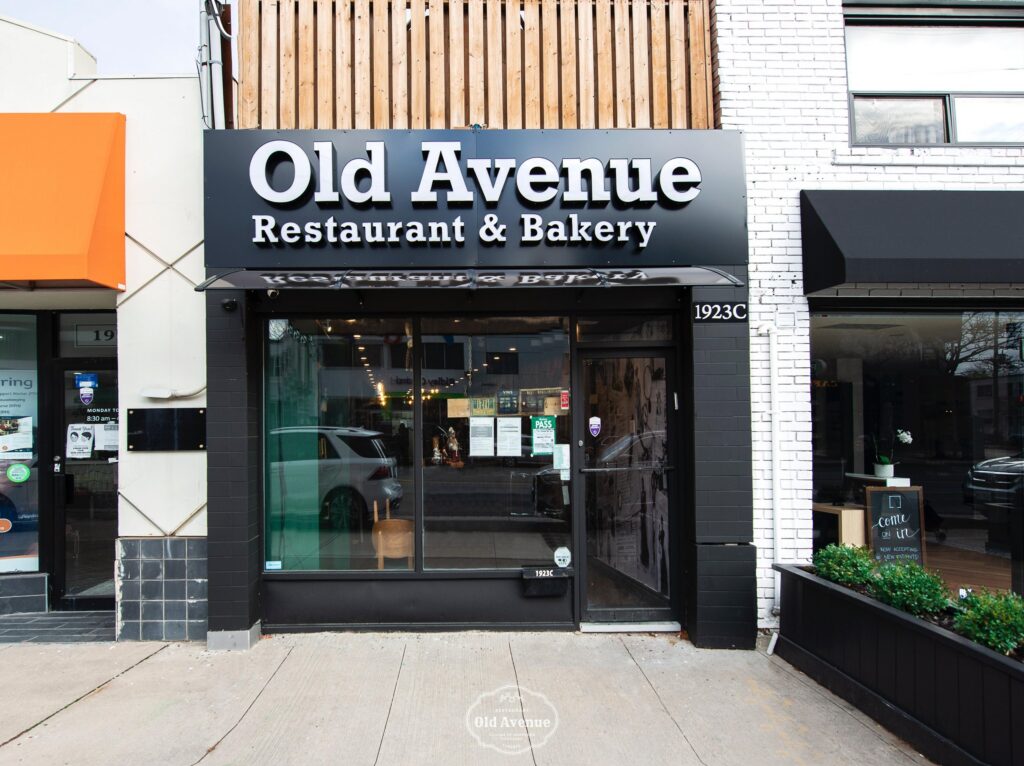
Photo: “Old Avenue Restaurant and Bakery, 1923C Avenue Road, Toronto” by Uswe070508, via Wikimedia Commons, licensed under CC BY-SA 4.0; unchanged. Illustrative Toronto restaurant exterior only; no endorsement or client relationship implied.
