
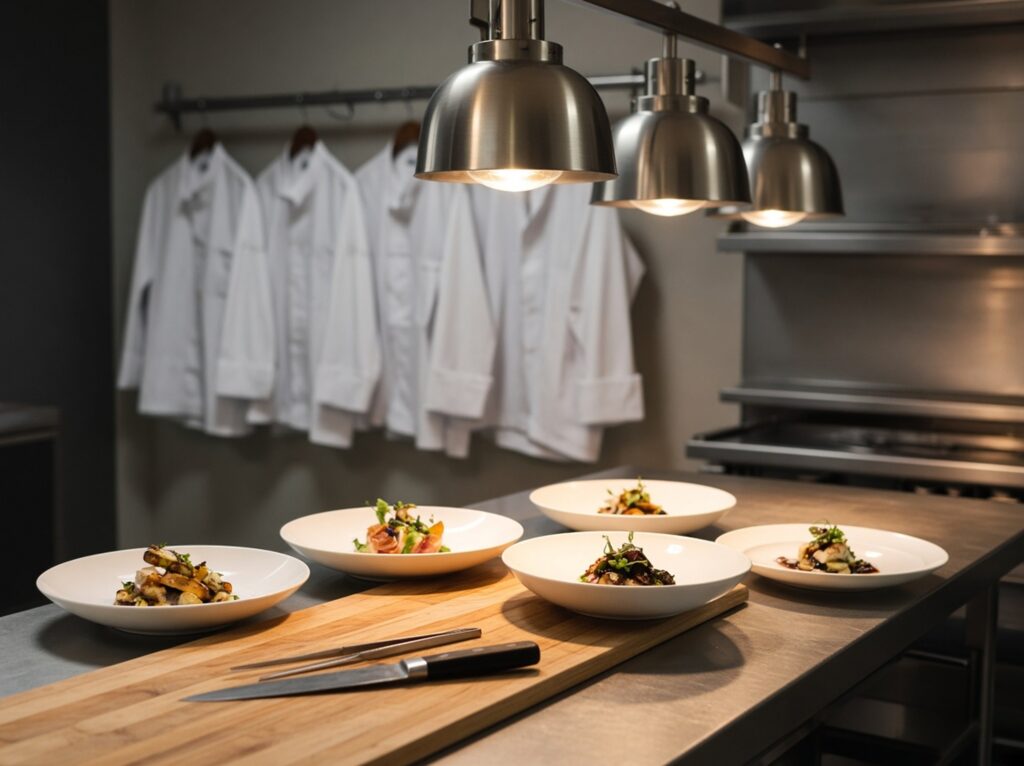
Every kitchen leadership team faces the same question sooner or later: develop the sous chef you have into the next chef de cuisine, or hire a proven leader from outside? Chef development done well builds loyalty and keeps standards consistent. Done badly, it promotes a strong cook into a job they aren't ready for. This guide is for private clubs, hotels and restaurant groups in Canada weighing that choice: what a development path looks like, what the step up pays and when an outside search makes more sense.
What chef development means at the leadership level
Moving from sous chef to chef de cuisine, or from chef de cuisine to executive chef, is less about cooking and more about running a business inside the kitchen. A development plan should build:
- Financial control: food and labour cost, ordering, inventory and reading a P&L.
- Menu ownership: developing and costing menus, not just executing them.
- People leadership: hiring, scheduling, coaching and handling performance problems.
- Member or guest relationships: in clubs especially, working with committees, members and the front of house.
- Standards and compliance: food safety, allergens and consistency across outlets and events.
Our chef de cuisine job description lays out what the next role demands, and Mastering the Kitchen covers the leadership side of the top job.
How clubs and hotels structure development
- Formal programs: some hospitality groups run structured management development. Auberge Collection's management development program is one example of a formal path into leadership roles.
- Rotations: time in banquets, à la carte, pastry and purchasing, so the future leader understands the whole operation.
- Delegated ownership: giving the sous chef one outlet, one menu or one event series to run, with real targets.
- Mentoring by the executive chef: regular reviews of cost, team and guest results, not just the plate.
What the step up pays
Pay rises meaningfully at each step, which is one reason development matters to retention. Gecko Hospitality's 2025 salary survey, based on hospitality management placements in the US and Canada, reports average salaries of US$100,000 for an Executive Sous Chef and US$124,500 for an Executive Chef in its hospitality section. At the top of a large hotel's food and beverage operation, the St. Regis Toronto lists its Director of Food and Beverage at C$144,000 to C$197,400 a year, bonus eligible, per Marriott's posting (live when checked October 29, 2026). For more on senior culinary pay, see best paying culinary jobs.
Build or buy: when to hire from outside
Development is the right call when you have time and a candidate who already shows leadership. An outside search is usually better when:
- The seat is open now: a development plan takes a year or more; a busy club season does not wait.
- You need a new direction: a menu repositioning or a new outlet often needs someone who has done it before.
- The internal candidate isn't ready: promoting too early risks losing both the sous chef and the standard.
- You want a benchmark: seeing outside candidates shows whether your internal choice is truly the strongest option.
Many clients do both: develop internally and run a confidential search in parallel, then decide on evidence. Our guide on how to hire a chef in Canada covers the outside route, and private club chef recruitment covers clubs specifically.
Keeping the chefs you develop
- Show a clear path, with the next title, timing and pay.
- Reward cost and team results, not only creativity.
- Give credit publicly, on menus, member events and internal communications.
- Know the market: competitors will approach a well-trained sous chef.
Frequently asked questions
Can Lecours Group assess an internal candidate?
Yes. We can benchmark an internal candidate against the outside market as part of a confidential search.
Where do you recruit chefs?
Lecours Group has recruited culinary leaders since 1991, in Toronto and across Canada first and selectively in the US. More answers are on our FAQs page.
Current opening: Chef de Cuisine, private club, Toronto ON
Lecours Group is recruiting a Chef de Cuisine (#10877) for a prestigious private club in Toronto, working closely with the Executive Chef to run daily kitchen operations, contribute to menus, manage food costs and develop the culinary team. See the role and our other current openings. Clubs and hotels hiring culinary leaders can find candidates with Lecours Group or contact us.