
Chef job requirements change sharply as you move up. Entry-level postings ask for knife skills, food safety and reliability. Senior roles at private clubs, luxury hotels and top restaurant groups, the ones that pay in the six figures, ask for something different: proof that you can lead other chefs, hit financial targets, build menus that sell and keep standards high when you are not in the kitchen. This guide sets out, from the candidate's side, what employers in Ontario and across Canada actually require for senior chef roles, and how to show you meet those requirements.
The foundation: trade certification
In Ontario, Cook is a Red Seal trade administered by Skilled Trades Ontario. The apprenticeship generally takes about 6,000 hours (approximately three years) of on-the-job and in-school training, and the trade covers far more than cooking: menu and nutrition planning, food costing, purchasing, scheduling and receiving, and food safety standards (Skilled Trades Ontario). For senior roles, a Red Seal is usually expected or strongly preferred, and candidates trained abroad are often asked how their credentials compare.
The next step up is the Certified Chef de Cuisine (CCC) designation from the Canadian Culinary Institute, described by the Institute as the highest rung in the career ladder for cooks in Canada. Prerequisites include a valid Red Seal (or approved international equivalent), five years of documented post-Red Seal employment including at least two years in a supervisory role, and a current food handler's certificate; the program then tests theory, menu design and development, and menu execution (Canadian Culinary Institute). Few senior postings require the CCC outright, but it is a clear signal of seriousness.
The real requirements for six-figure chef roles
1. Years leading chefs, not just cooks
Employers hiring a chef de cuisine, culinary director or Director of Culinary want to see that you have led sous chefs and junior chefs, not only line cooks. Gecko Hospitality's 2025 salary survey (US and Canada, vendor survey) reports an average of 19 years of industry service for Culinary Directors and 15 years for sous chefs and executive sous chefs it surveyed. That is a useful reality check: senior kitchen leadership is usually built over well over a decade.
2. Food cost and labour results
Expect interviewers to ask what your food cost and labour percentages were, what they were when you started, and what you changed. Bring specific numbers. Senior chefs are increasingly judged like department heads, and the requirement is not only knowing the targets but having moved them.
3. Menu development that fits the business
A private club needs menus that suit long-standing members and evolve without alienating them. A hotel needs outlet menus, room service and banquet menus that work at volume. A restaurant group needs dishes that can be reproduced across locations. Show examples of menus you designed, costed and launched, and what happened to sales afterwards.
4. Banquets, events and volume
Club and hotel roles often involve weddings, tournaments, conferences and member events on top of à la carte service. Candidates who can show event counts, covers and the systems they used to keep quality consistent stand out.
5. People development and retention
The board posting for our current private club opening asks for "exceptional leadership skills, and a genuine passion for mentoring and developing a culinary team." Be ready to name chefs you trained who were promoted, and to explain how you scheduled, coached and kept people in a tight labour market. Our post on the chef shortage in Canada explains why employers weight this so heavily.
6. Food safety, compliance and workplace culture
A current food handler certification, a clean inspection record, allergen management systems and a respectful kitchen culture are baseline expectations. In unionised hotels, experience working within a collective agreement is a real plus.
7. Guest and member-facing presence
Senior chefs are expected to walk the dining room, present to committees, meet event clients and work closely with the general manager and the food and beverage team.
Requirements by role level
- Sous chef: Red Seal (or equivalent), several years in quality kitchens, shift leadership, ordering and inventory support.
- Chef de cuisine: running a kitchen day to day, menu input, food cost responsibility, hiring and training. Our chef de cuisine job description sets out the duties in detail.
- Culinary director / Director of Culinary: responsibility for all outlets and events, full food P&L, menu strategy, senior team building and close work with ownership or the board. See our director of culinary jobs guide.
What these roles pay
The same Gecko survey (figures in US dollars, US and Canada combined) reports an average of US$124,500 for the top chef role in hospitality settings such as clubs, hotels and resorts, and US$112,500 for Culinary Directors in restaurant management. In Toronto, a current senior private chef posting in Rosedale lists C$110,000 to C$125,000 a year (posting). For more, see our list of the best paying culinary jobs and our overview of private club chef recruitment.
How to show you meet the requirements
- Lead your résumé with results: covers, revenue, food cost improvements, events delivered, chefs promoted.
- Bring a portfolio: menus with costing, photos of plates and banquet set-ups, and a short note on what each menu achieved.
- Prepare for a tasting and an office exercise: many employers now pair the tasting with a costed menu or labour plan.
- Line up references from both directions: a former general manager or owner, and a former sous chef who worked for you.
- Talk to a recruiter who knows the senior market: many of the best roles are filled through confidential searches and never posted widely.
Frequently asked questions
Do you need a Red Seal to become a senior chef in Ontario?
It is not legally required for every kitchen job, but most senior employers expect or strongly prefer it, and it is a prerequisite for the CCC designation.
How many years of experience do senior chef roles require?
Postings vary, but leadership roles usually look for several years running a kitchen after many more years in quality operations. Survey averages for culinary directors sit near two decades in the industry.
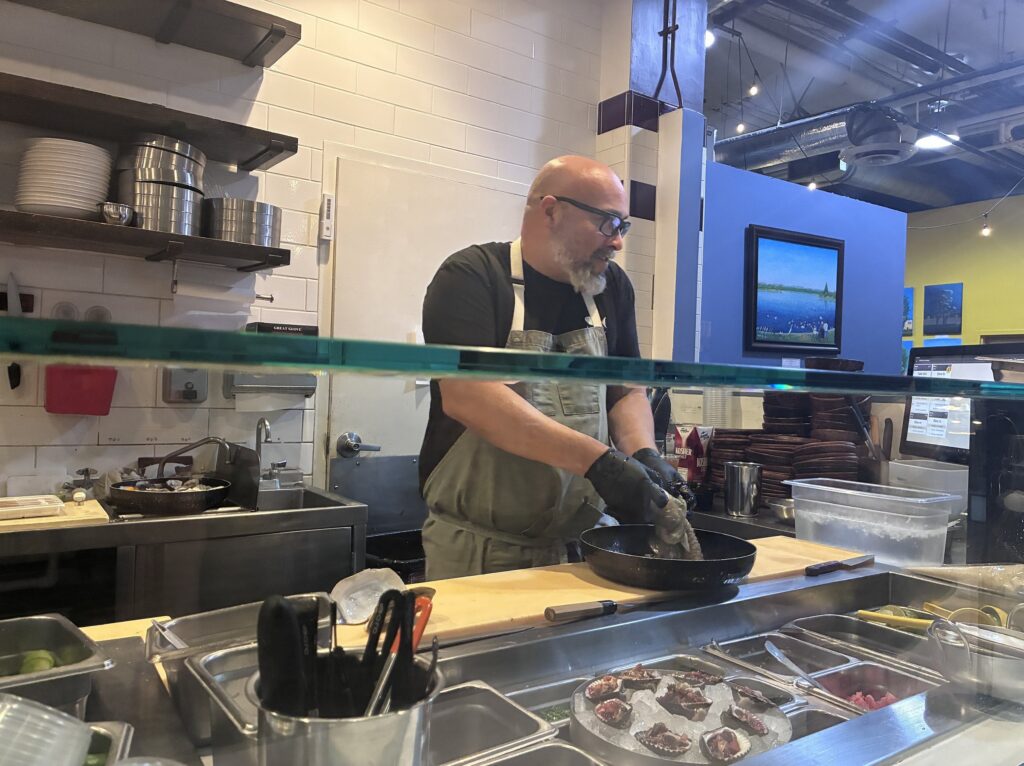
Hero image: "Holbox chef Gilberto Centina Jr preparing geoduck for tasting menu" by Scarykitty, via Wikimedia Commons, licensed CC BY-SA 4.0; cropped.

Current opening: Chef de Cuisine (#10877), Private Club, Toronto ON
Lecours Group is recruiting a Chef de Cuisine for a prestigious private club in Toronto. The role oversees daily kitchen operations, contributes to menu development, manages food costs and leads and mentors the culinary team in a member-focused setting, and suits a chef with a strong upscale dining background. If you meet these chef job requirements, see the role and our other current openings. Employers can find candidates with Lecours Group.